 Current
location:
Current
location: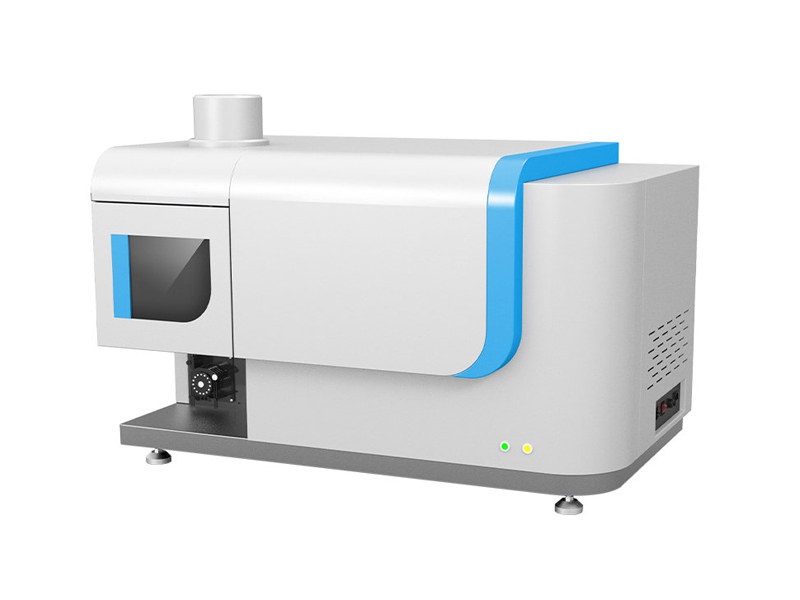



Product Introduction
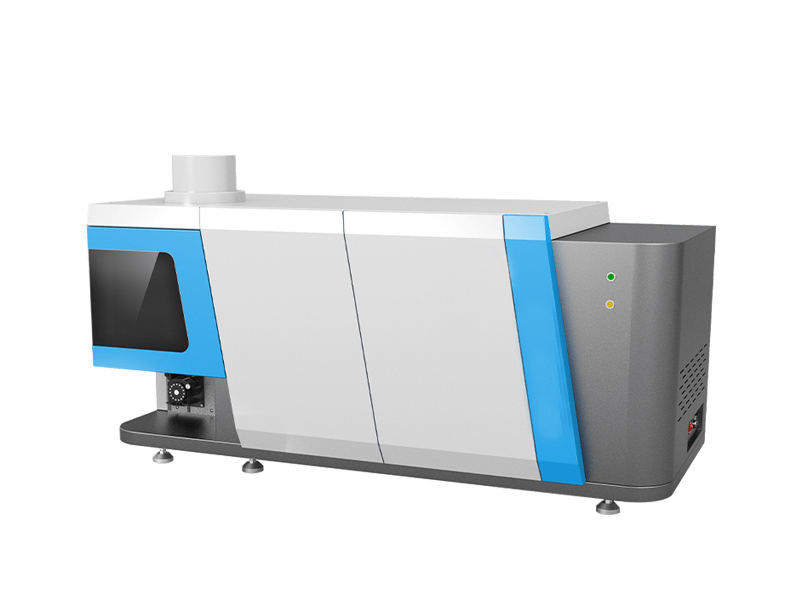
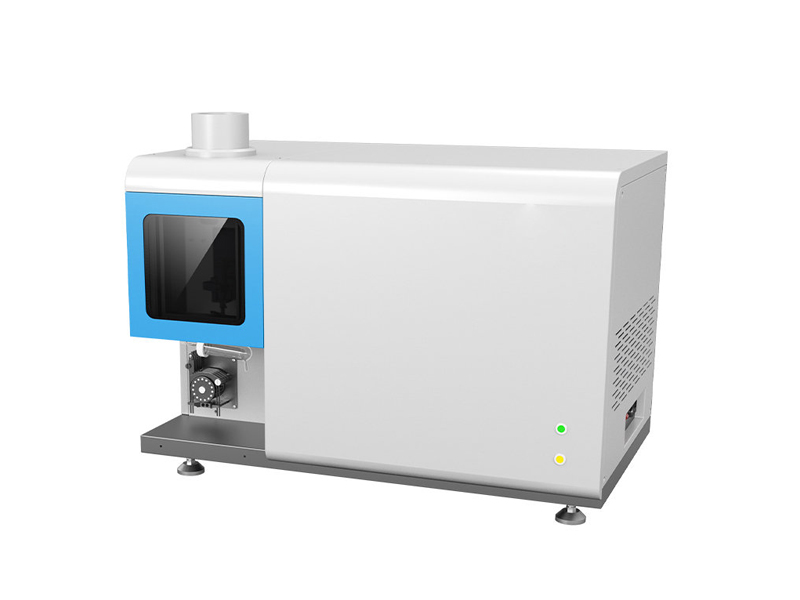
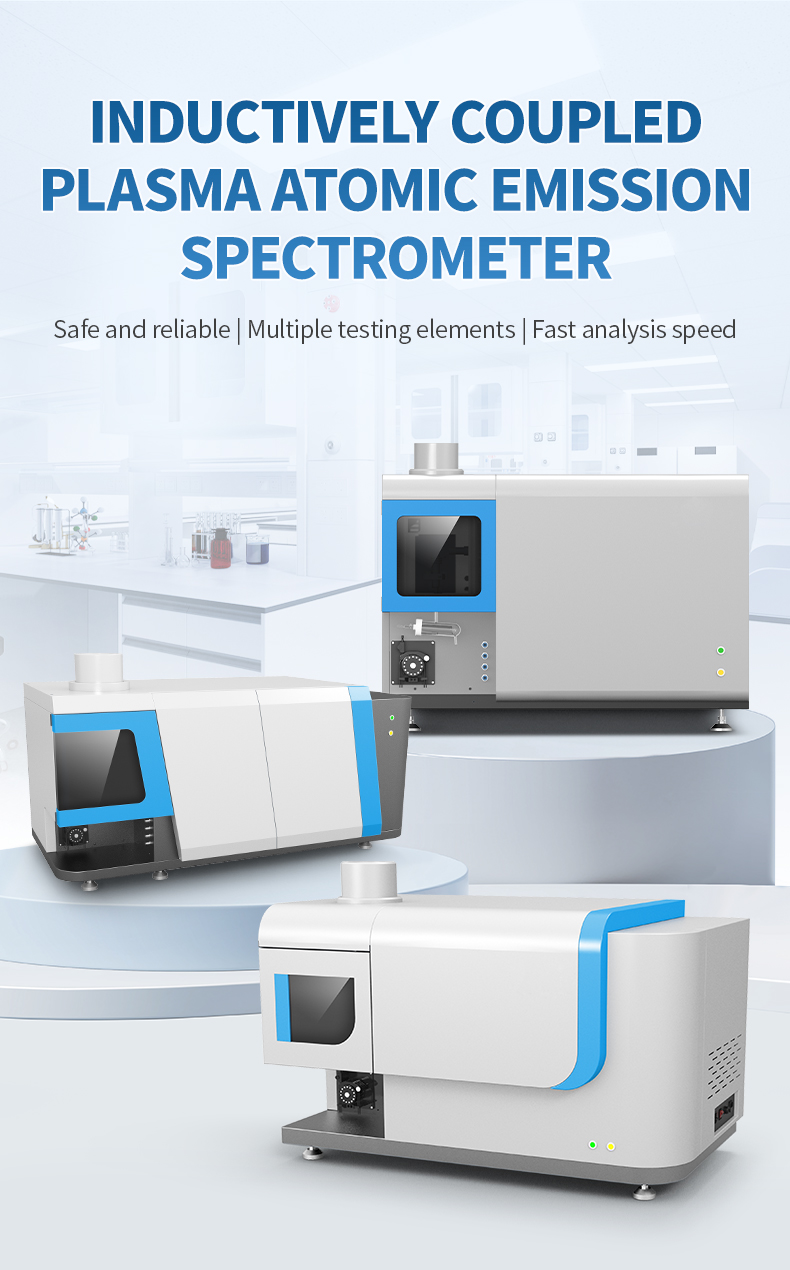
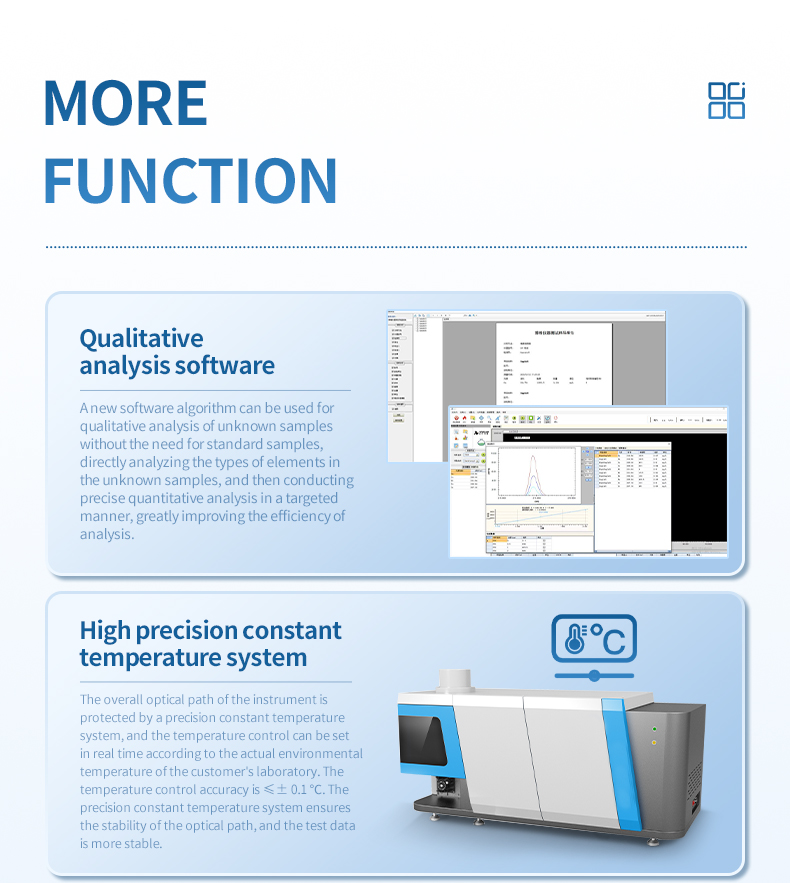
When laboratory analysts encounter unknown samples — a failed component from a manufacturing line, a suspected counterfeit material, or an uncharacterized geological specimen — they need an instrument that can first identify what elements are present before deciding how to quantify them. The HM-ICP3 addresses this need with built-in qualitative analysis software that determines elemental composition without requiring any reference standards, then seamlessly transitions into targeted quantitative measurement.
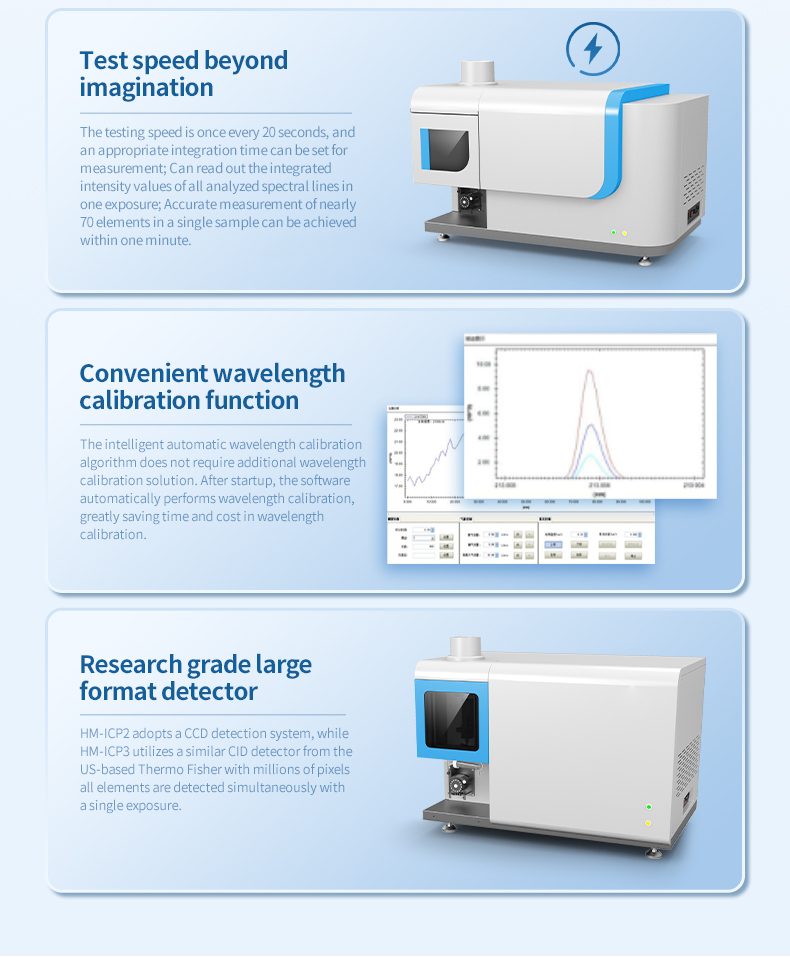
The CID (charge-injection device) detector at the core of the system matches the performance of Thermo Fisher's ICP instruments, offering million-pixel coverage across 165–900nm with single-exposure readout. Unlike CCD detectors that can suffer from charge blooming between adjacent pixels, the CID architecture reads each pixel non-destructively, providing superior dynamic range and eliminating cross-contamination between spectral lines. This makes the HM-ICP3 particularly suited to samples where both trace impurities and major constituents must be measured accurately in the same analysis.
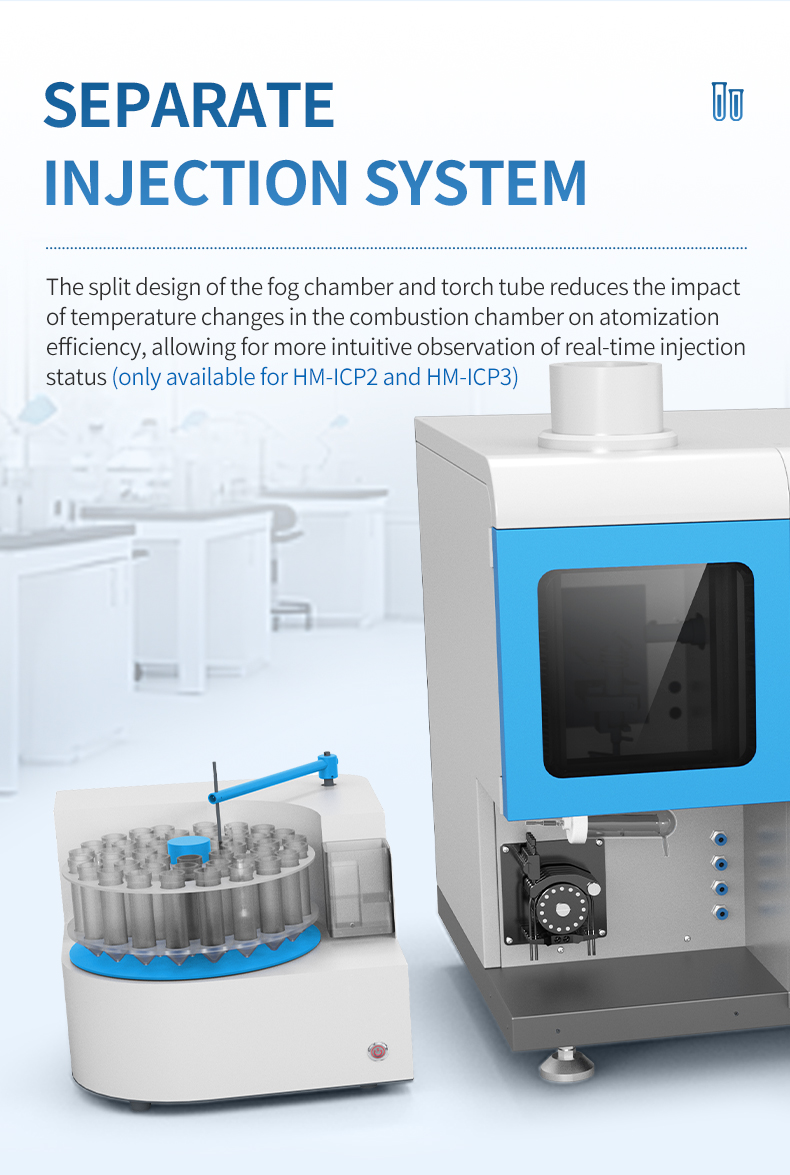
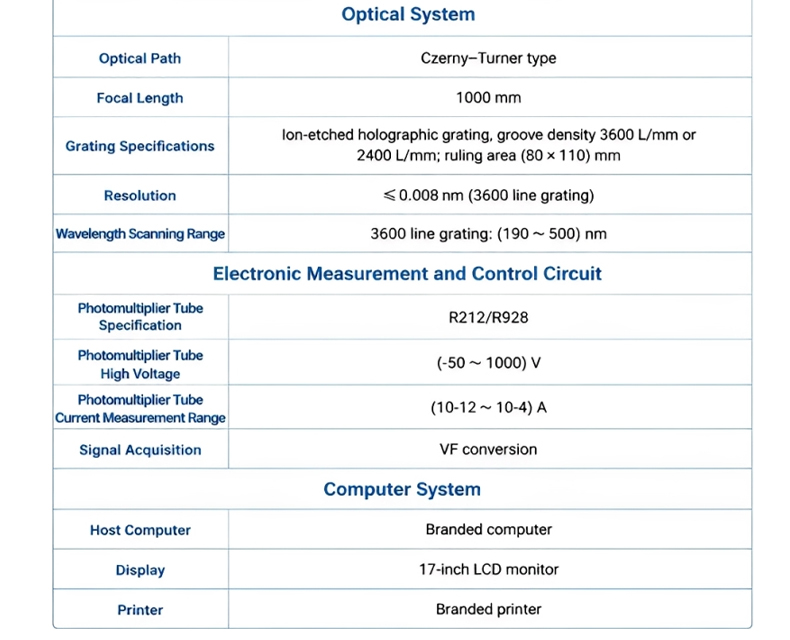
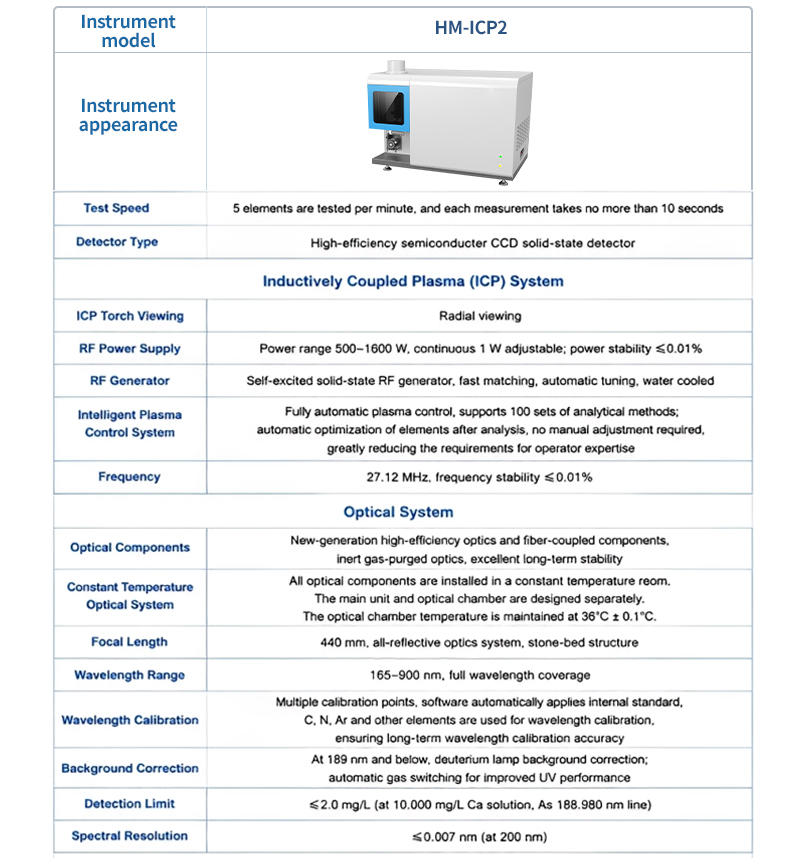
The echelle grating cross-dispersion optical system achieves ≤0.007nm resolution at 200nm within a sealed constant-temperature chamber maintained at 35°C ±0.1°C. The absence of moving optical parts eliminates mechanical drift and ensures that wavelength calibration — performed automatically at each startup using ambient emission lines — remains stable throughout extended analytical sessions. The split-chamber injection design with a patented extended dual-tube spray chamber reduces moisture vapor interference and allows direct visual monitoring of the nebulization process.
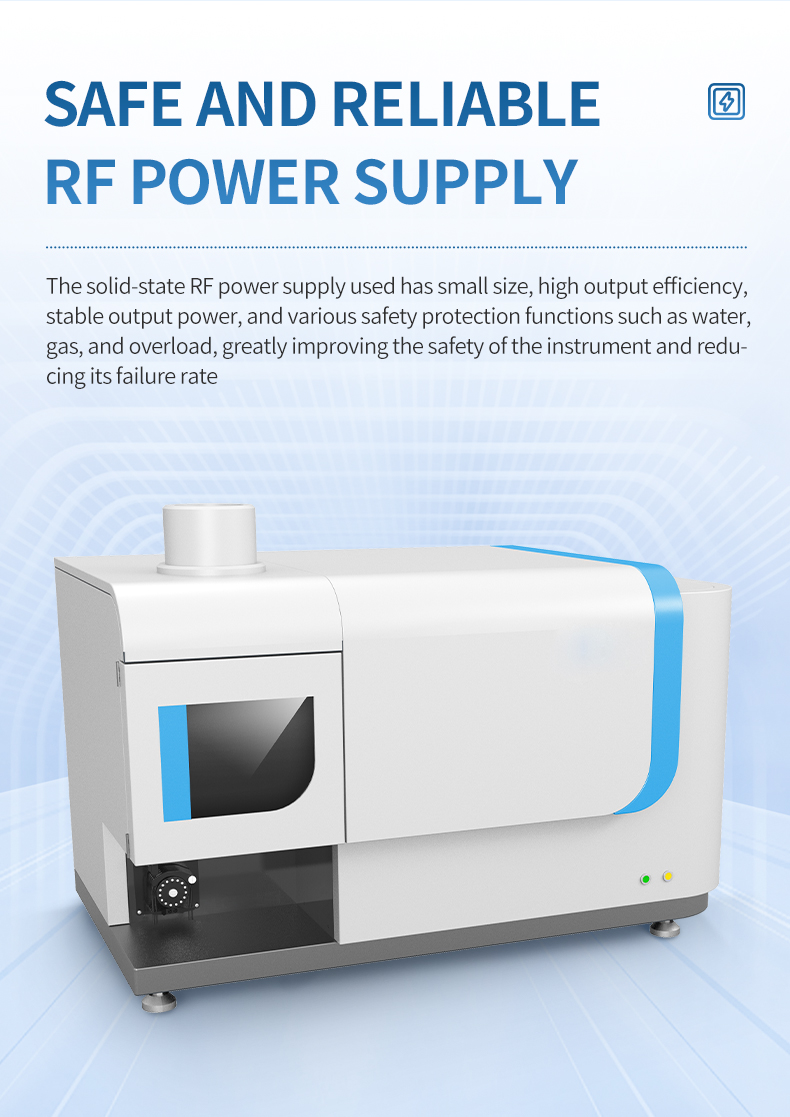
With total argon consumption below 12L/min and a 700–1500W RF generator providing stable plasma conditions, the HM-ICP3 combines professional analytical capability with economical operation. The instrument achieves RSD values below 0.5% for repeatability and below 1% over 2-hour stability tests, meeting the precision requirements of regulatory and research applications.
Applications
-
Environmental compliance — accurate rapid analysis of heavy metals in water, soil, and atmospheric particulate matter for environmental protection agencies and monitoring stations
-
Geological and mineral exploration — precise element profiling for mine planning, ore grade control, and post-mining environmental remediation assessment
-
Metallurgical process control — real-time alloy composition verification and impurity monitoring throughout steel, aluminum, and specialty metal production
-
Toy and consumer product safety — heavy metal screening (Pb, Cd, Hg, Cr, As) to verify compliance with international safety standards, protecting consumer health
-
Precious metal purity assessment — quantification of trace impurities that directly affect the value and performance characteristics of gold, silver, platinum, and palladium
-
Rare earth element analysis — high-purity rare earth characterization for applications in magnets, phosphors, catalysts, and electronics, where impurity levels directly influence material properties
-
Failure analysis and forensics — qualitative identification of unknown material composition followed by targeted quantitative analysis for root cause determination
-
Pharmaceutical elemental impurity testing — comprehensive screening per ICH Q3D and pharmacopeial standards for drug substance and product safety
Key Features & Advantages
-
Qualitative analysis without standards — built-in algorithm identifies element types in unknown samples, enabling rapid compositional screening before targeted quantification; eliminates the need to pre-define element lists
-
CID detector with non-destructive readout — Thermo Fisher-grade million-pixel detector covering 165–900nm; each pixel read independently without inter-pixel charge transfer, eliminating blooming artifacts
-
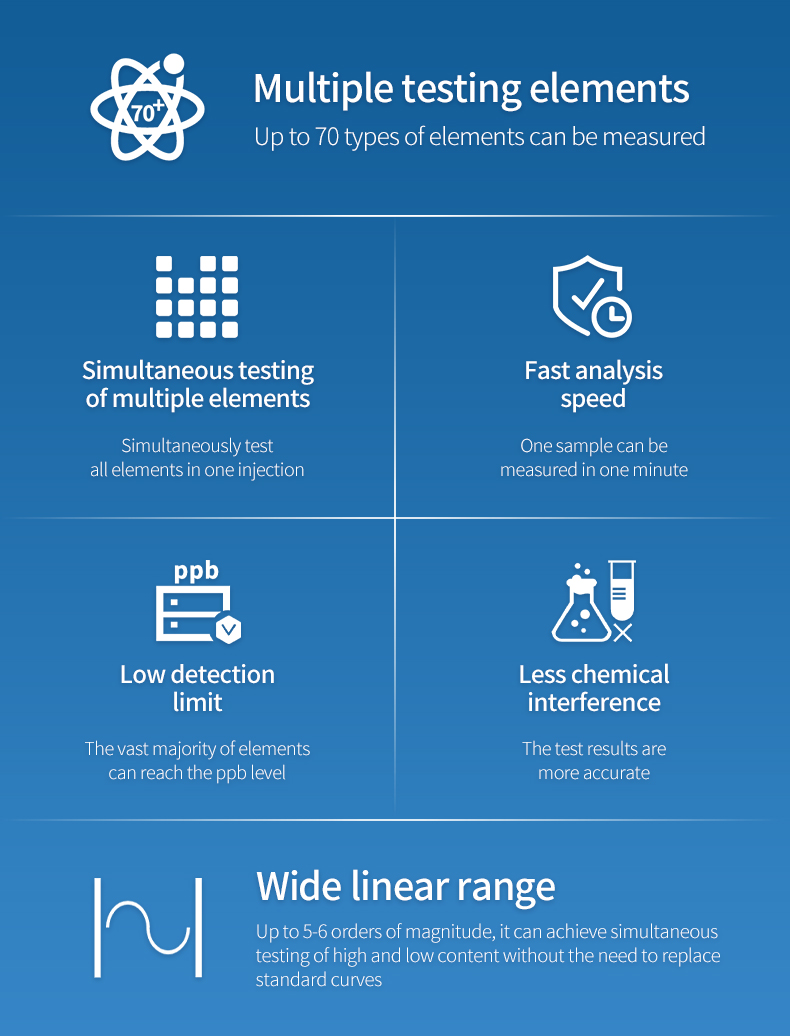
72+ element coverage with 1–10ppb detection — broader element range than sequential PMT instruments; suitable for comprehensive material characterization
-
20-second full-spectrum cycle — 2ms per spectral line readout; complete multi-element measurement within one minute per sample
-
Echelle-prism cross-dispersion with ≤0.007nm resolution — fixed optical configuration with no moving parts; sealed at 35°C ±0.1°C for long-term wavelength stability
-
Automatic wavelength calibration at startup — software auto-calibrates using ambient emission lines; no external calibration solution required, saving time and consumables
-
Split-chamber injection with patented extended dual-tube spray chamber — reduces moisture vapor interference; allows real-time observation of sample nebulization quality
-
Precision constant temperature optical system — distributed temperature control at 35°C ±0.1°C ensures stable optical alignment and wavelength accuracy during long analytical runs
-
5–6 orders of magnitude linear range — simultaneous high and low concentration measurement without standard curve changes
-
RSD <0.5% repeatability, <1% stability over 2 hours — meets the precision demands of regulatory methods and research publications
-
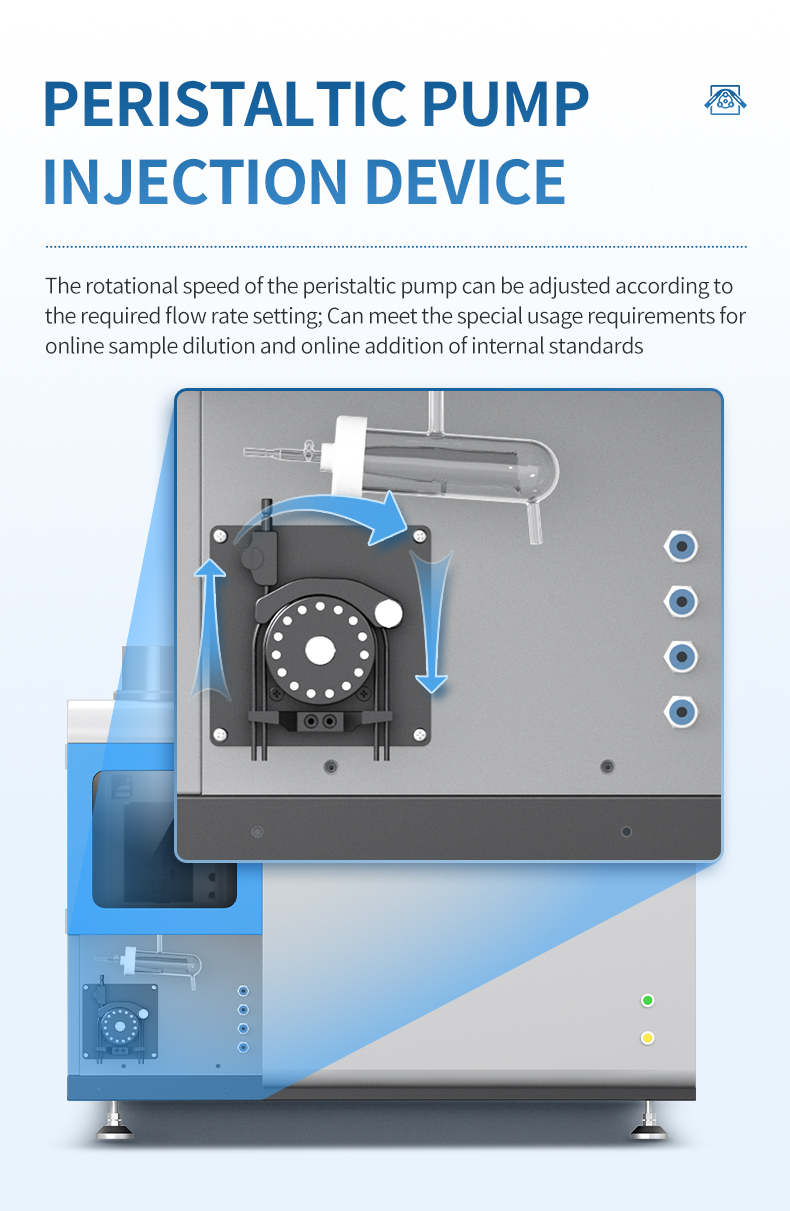
5-channel 16-roller peristaltic pump with patented design — continuously adjustable speed; supports online sample dilution, internal standard addition, and multi-reagent workflows
-
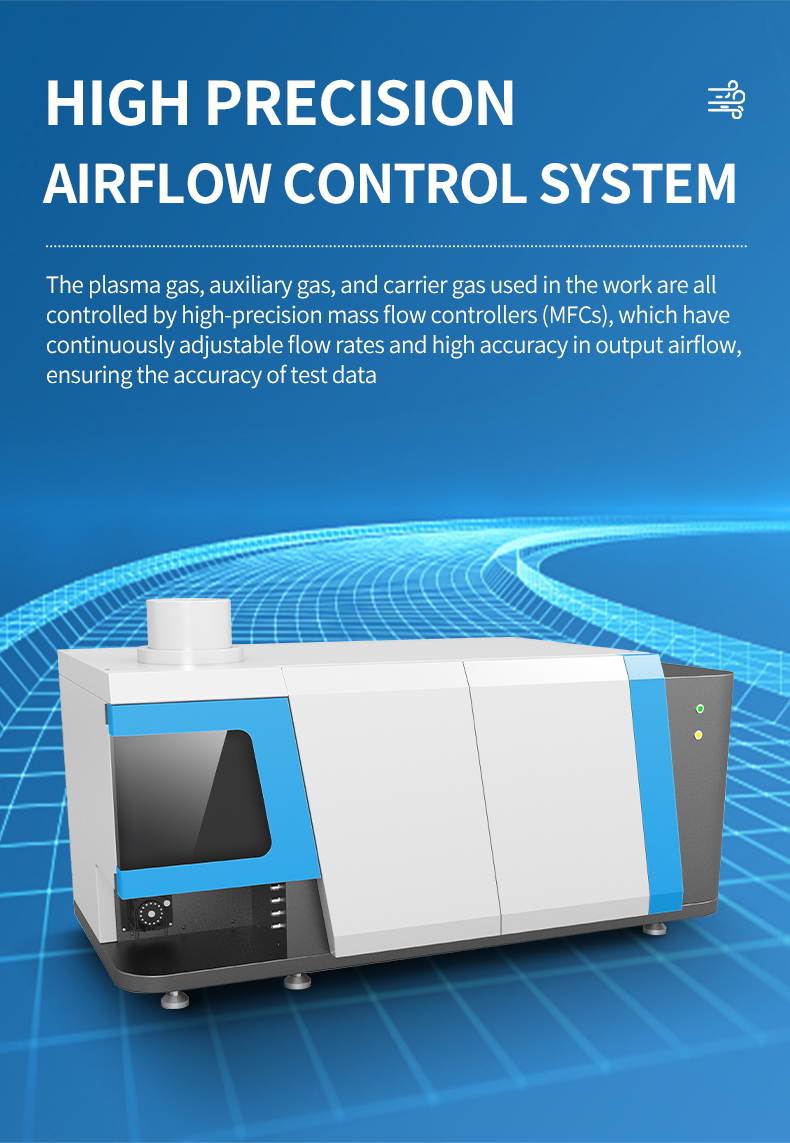
Low argon consumption (<12L/min) — efficient gas management reduces operating costs while maintaining plasma stability
-
Multiple nebulizer configurations — interchangeable nebulizers for high-salt, HF-resistant, and high-sensitivity applications; easy maintenance
-
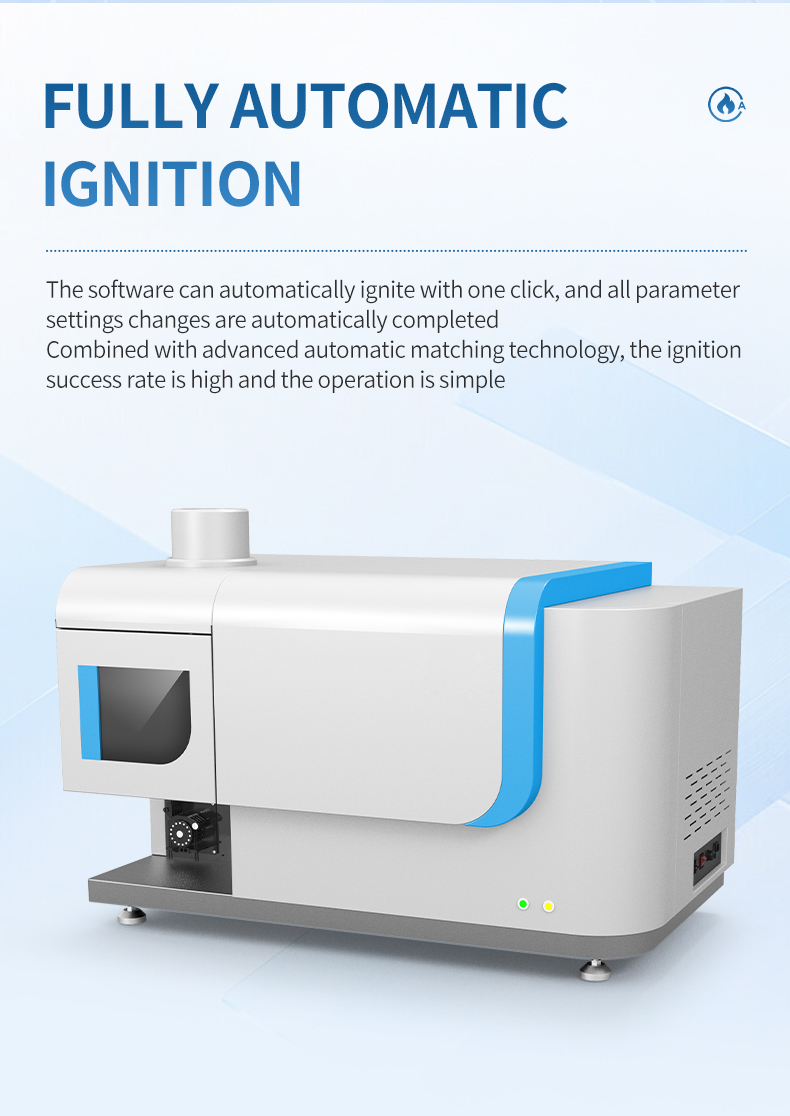
Full-auto ignition with impedance matching — one-click startup with reliable plasma ignition regardless of sample matrix
-
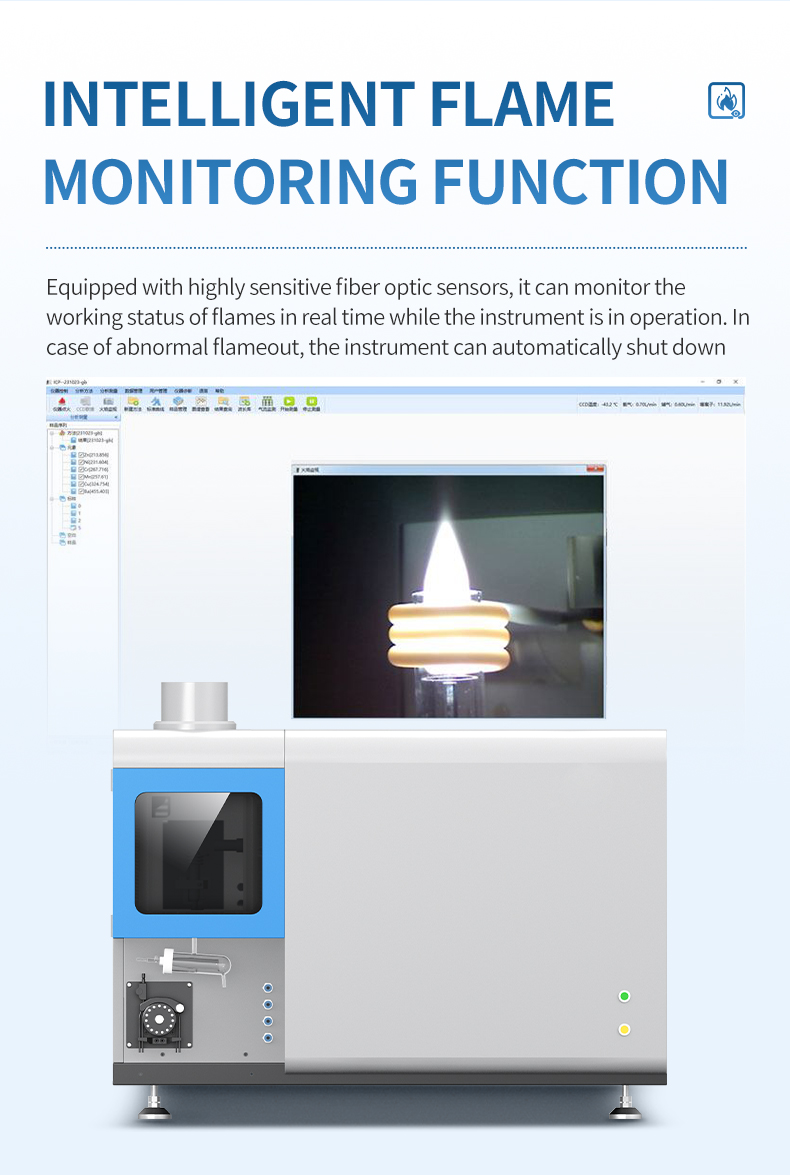
Intelligent flame monitoring with auto shutdown — fiber optic sensor provides continuous plasma status monitoring and emergency instrument protection
-
High-precision MFC gas flow control — precision mass flow controllers for all gas channels with continuous adjustability
Technical Specifications
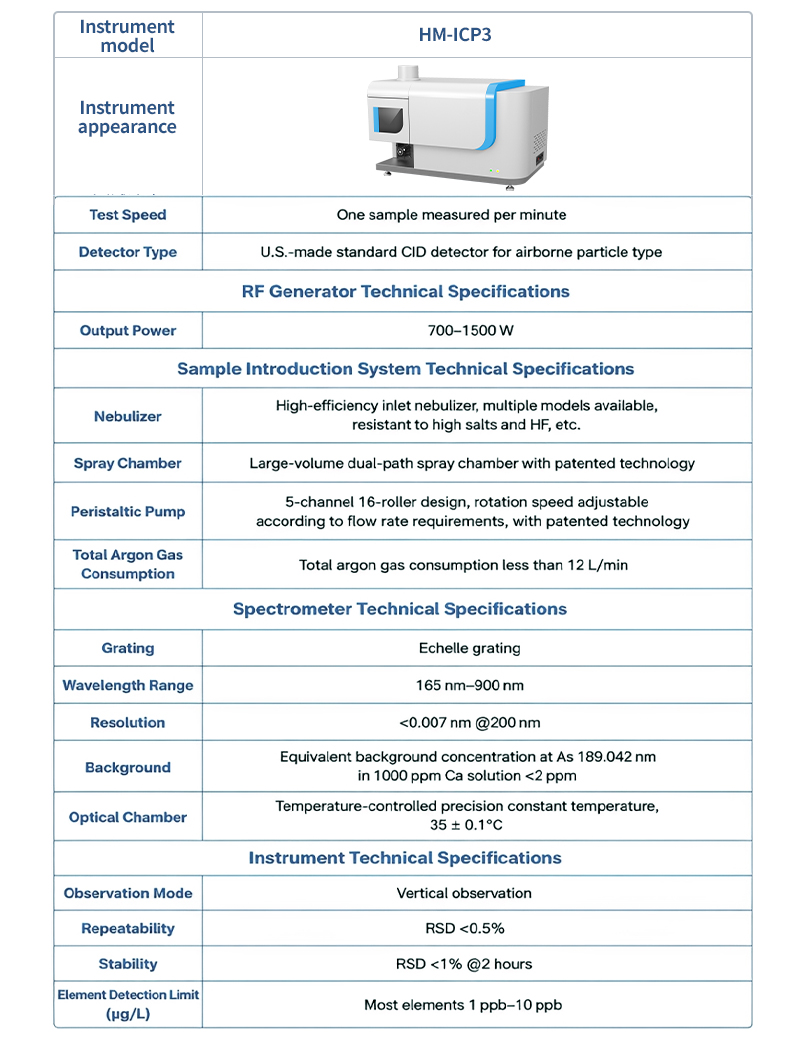
| Parameter | Specification |
|---|---|
| Model | HM-ICP3 |
| Technique | Full-Spectrum Simultaneous ICP-OES with CID Detection |
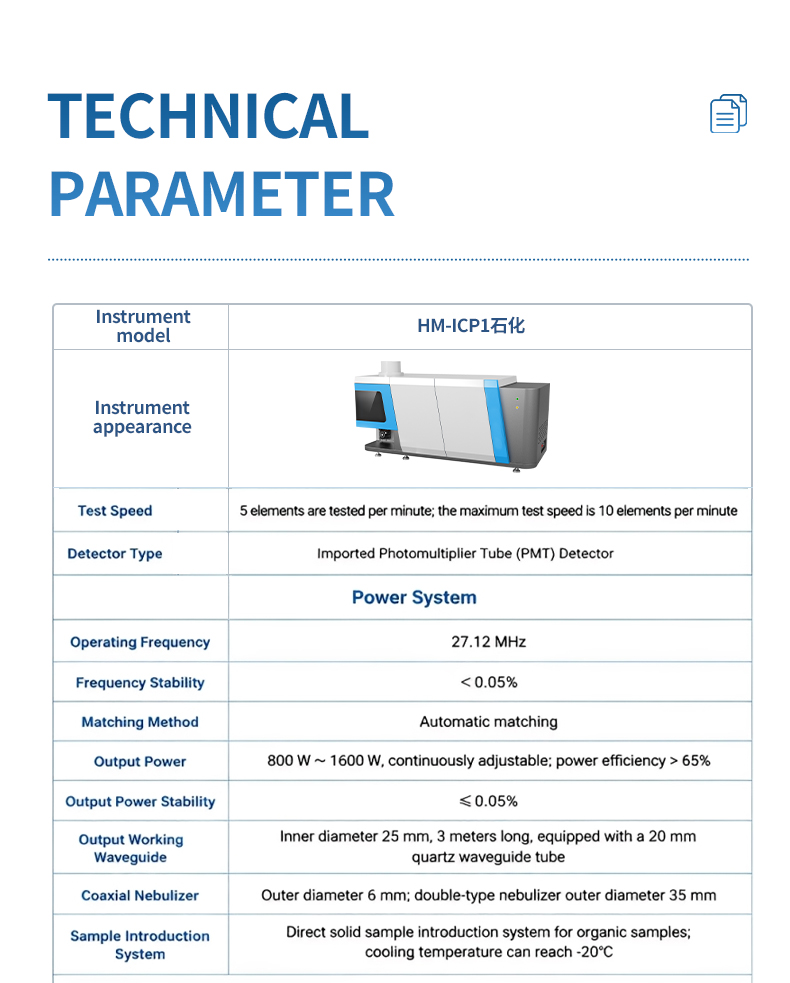
| RF Output Power | 700–1500W |
| Nebulizer | High-efficiency inlet nebulizer; multiple models available (high-salt, HF-resistant, etc.) |
| Spray Chamber | Extended dual-tube design with patented technology |
| Peristaltic Pump | 5-channel, 16-roller; speed adjustable; patented technology |
| Total Argon Consumption | <12L/min |
| Grating | Echelle grating |
| Wavelength Range | 165–900nm |
| Resolution | <0.007nm (at 200nm) |
| Stray Light | Equivalent background concentration <2ppm (10000ppm Ca at As 189.042nm) |
| Optical Chamber | Distributed precision constant temperature, 35°C ±0.1°C |
| Detector Type | CID |
| Observation Mode | Vertical observation |
| Repeatability | RSD <0.5% |
| Stability | RSD <1% @ 2 hours |
| Test Speed | 2ms per spectral line readout; 20s for all elements |
| Element Detection Limit (μg/L) | Most elements 1–10 ppb |
| Detectable Elements | 72+ |
| Linear Range | 5–6 orders of magnitude |
FAQ
Q1: How does the qualitative analysis function work without standard samples?
A: The HM-ICP3's qualitative analysis software uses an advanced spectral pattern recognition algorithm. When an unknown sample is introduced into the plasma, the CID detector captures the complete emission spectrum. The software then matches the observed spectral lines against its built-in database to identify which elements are present. Once the element composition is known, the analyst can set up targeted quantitative methods for precise concentration measurement. This two-step approach is particularly useful for failure analysis, material forensics, and any situation where the element suite is not known in advance.
Q2: What advantages does the CID detector offer over CCD for elemental analysis?
A: The CID (charge-injection device) detector reads each pixel non-destructively, meaning the charge accumulated at each pixel can be measured without erasing it. This allows multiple readouts of the same exposure, improving signal-to-noise ratio for weak signals. Additionally, because charge does not transfer between adjacent pixels during readout, there is no blooming effect — strong spectral lines cannot contaminate neighboring weak lines. This makes CID particularly effective when analyzing samples with both trace impurities and major constituents, a common scenario in metallurgical and precious metal analysis.
Q3: Can this instrument be used for regulatory compliance testing?
A: Yes. The HM-ICP3's RSD values below 0.5% for repeatability and below 1% for 2-hour stability meet the precision requirements of most regulatory methods, including EPA methods for environmental monitoring and ICH Q3D guidelines for pharmaceutical elemental impurities. The ≤0.007nm spectral resolution and low stray light specification ensure that spectral interferences are minimized, which is critical for accurate regulatory measurements in complex matrices.
Q4: How does the instrument handle rare earth element analysis?
A: Rare earth elements present a particular analytical challenge because their emission lines are densely packed in the spectrum. The HM-ICP3's echelle grating optics with ≤0.007nm resolution at 200nm provides sufficient spectral separation to resolve adjacent rare earth lines. The CID detector's full-spectrum capability captures all rare earth lines simultaneously, and the wide linear range of 5–6 orders of magnitude allows both high-purity rare earth (99.99%+) and ore-grade samples to be analyzed without method changes.
Q5: What is the argon gas consumption, and how does it affect operating costs?
A: Total argon consumption is below 12L/min during operation. This is achieved through efficient gas path design and precision MFC management. Compared to ICP instruments consuming 15–20L/min, the HM-ICP3 can reduce annual argon costs substantially, particularly for laboratories running continuous daily operations. The instrument also features auto-shutdown on gas supply loss, preventing wasted gas during supply interruptions.
Q6: How does the split-chamber injection benefit precious metal and rare earth analysis?
A: The split-chamber design isolates the spray chamber from the torch compartment, preventing thermal radiation from the plasma from affecting nebulization consistency. For precious metal and rare earth samples — where precise, reproducible sample introduction is critical for accurate quantification — this thermal isolation ensures that aerosol generation remains stable throughout the analytical run. The patented extended dual-tube spray chamber also reduces moisture vapor interference, which can be significant for acid-dissolved geological and metallurgical samples.
Q7: What sample introduction options are available for different analytical scenarios?
A: The HM-ICP3 offers interchangeable nebulizer options including high-salt configurations for dissolved ore samples, HF-resistant setups for silicate digestions, and high-sensitivity nebulizers for trace-level determinations. The 5-channel 16-roller peristaltic pump supports simultaneous sample uptake, waste drainage, internal standard addition, and online dilution. This flexibility allows a single instrument to handle the full range of sample types encountered in research and commercial analytical laboratories.
Article address:https://www.spectrometer.top/pro9/cid-icp-oes-rare-earth-precious-metal-analysis.html
- Previous: Full Spectrum ICP-OES with CCD Detection for Environmental and Food Safety Screening
- Next: no more