 Current
location:
Current
location:



Product Introduction
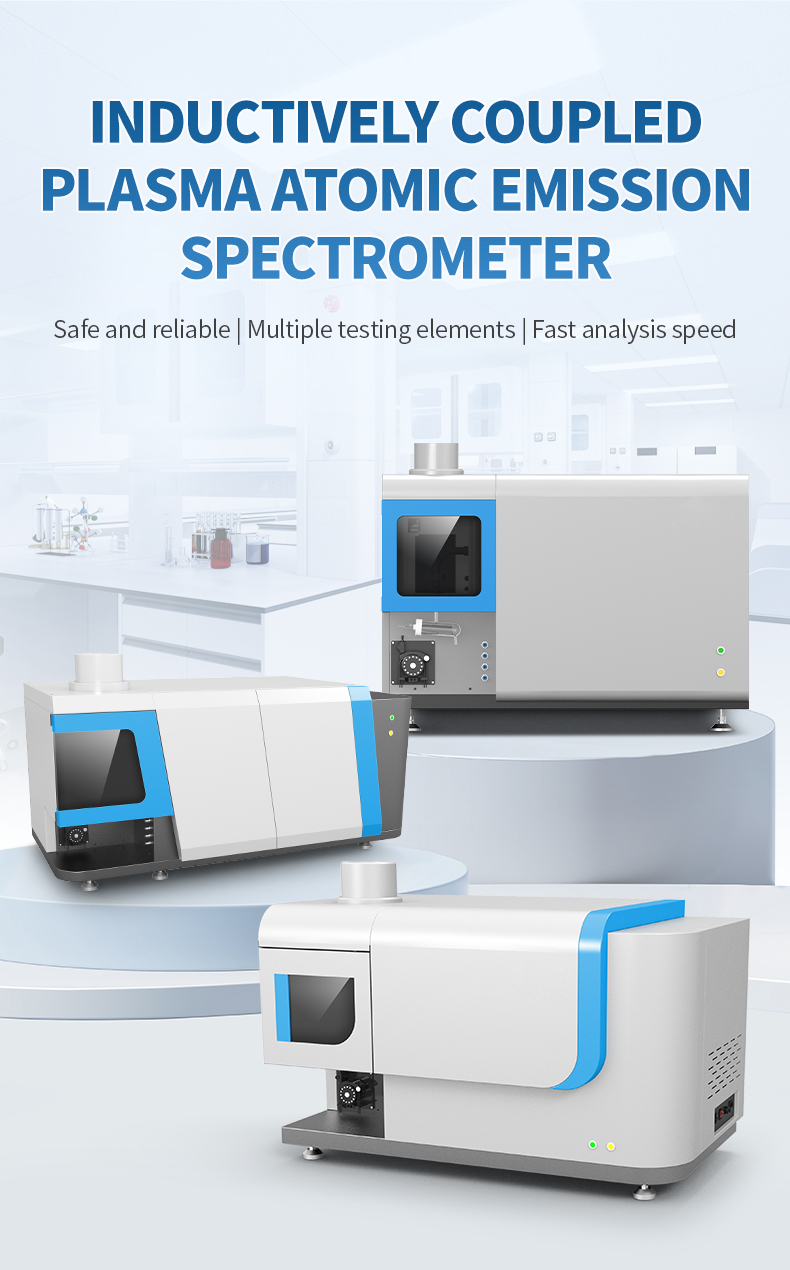
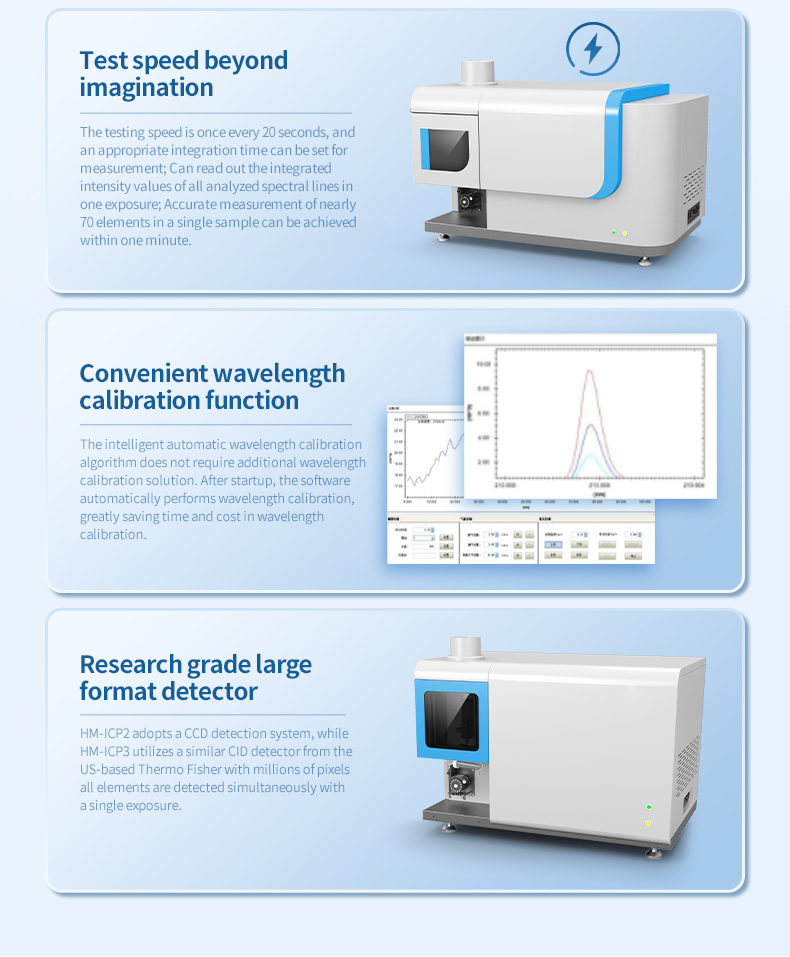
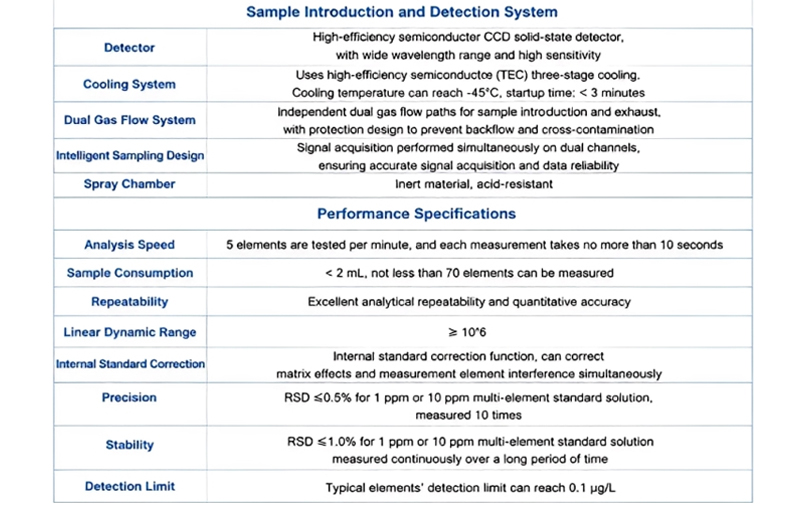
Laboratories conducting multi-element screening — whether for environmental compliance, food safety monitoring, or metallurgical quality control — face a common bottleneck: sequential scanning ICP instruments require lengthy measurement cycles to cover all target elements. The HM-ICP2 solves this with simultaneous full-spectrum detection, capturing the complete 165–900nm wavelength range in a single 20-second exposure.
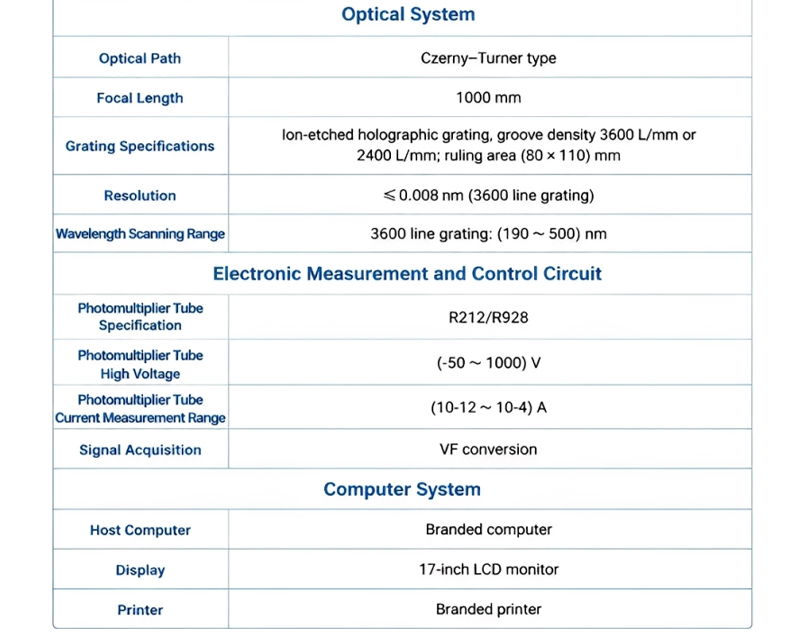
At the heart of the system, a research-grade CCD detector with million-pixel resolution and three-stage thermoelectric cooling to -45°C reads every spectral line simultaneously. This eliminates the time penalty of scanning between wavelengths, reducing a typical 70-element analysis from over 10 minutes to under one minute. Per-pixel anti-saturation spill-over protection ensures that both trace-level and high-concentration elements can be quantified in the same measurement, a critical advantage for samples where concentrations span several orders of magnitude.
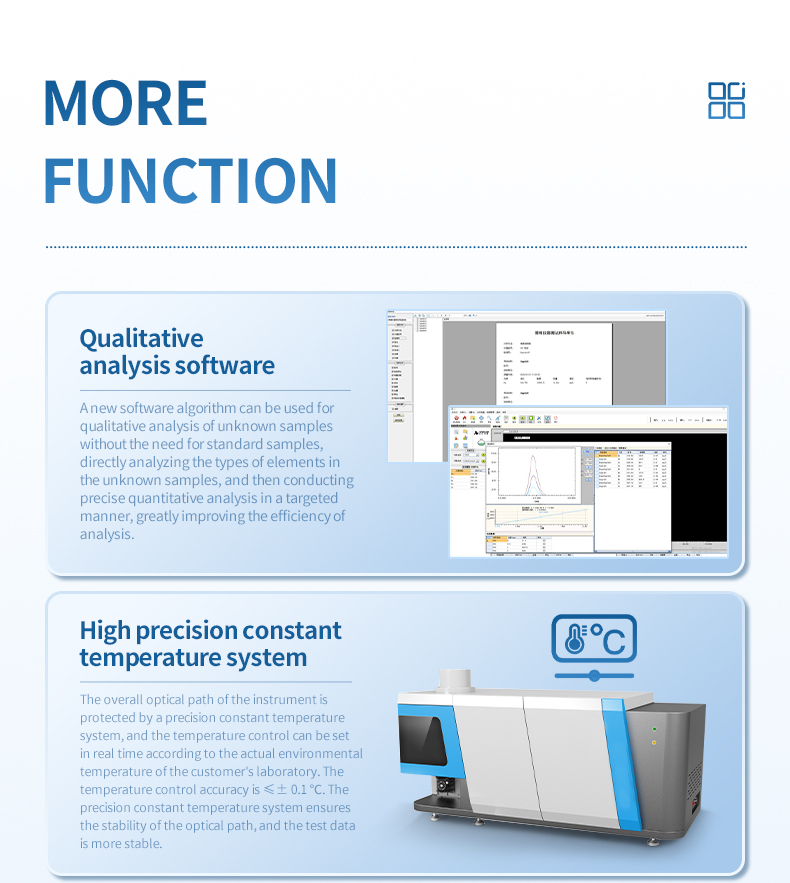
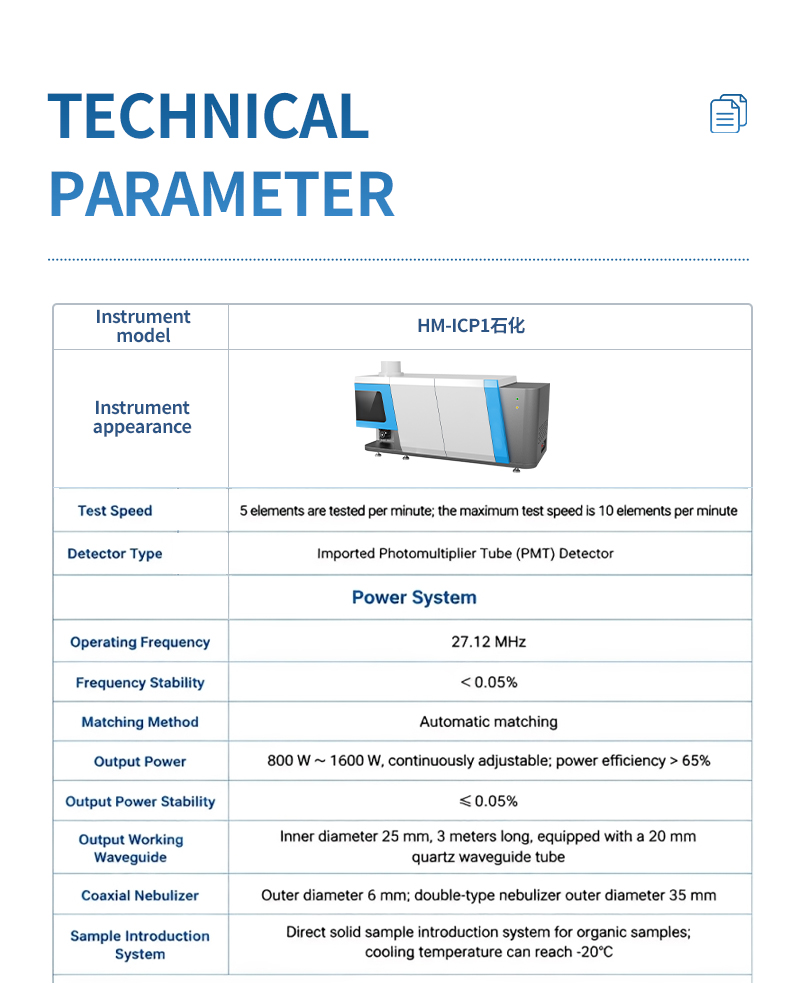
The echelle grating cross-dispersion optical system delivers ≤0.007nm resolution at 200nm with no moving optical components, guaranteeing long-term stability and eliminating mechanical drift. All optics reside in a sealed constant-temperature chamber at 36°C ±0.1°C with argon purge. Automatic wavelength calibration using C, N, and Ar emission lines at each startup eliminates the need for external calibration solutions, reducing daily maintenance time and consumable costs.
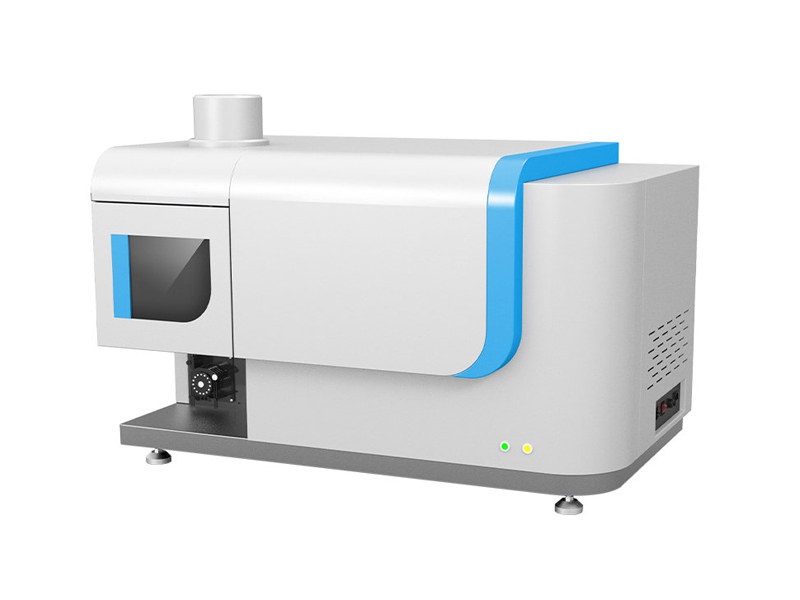
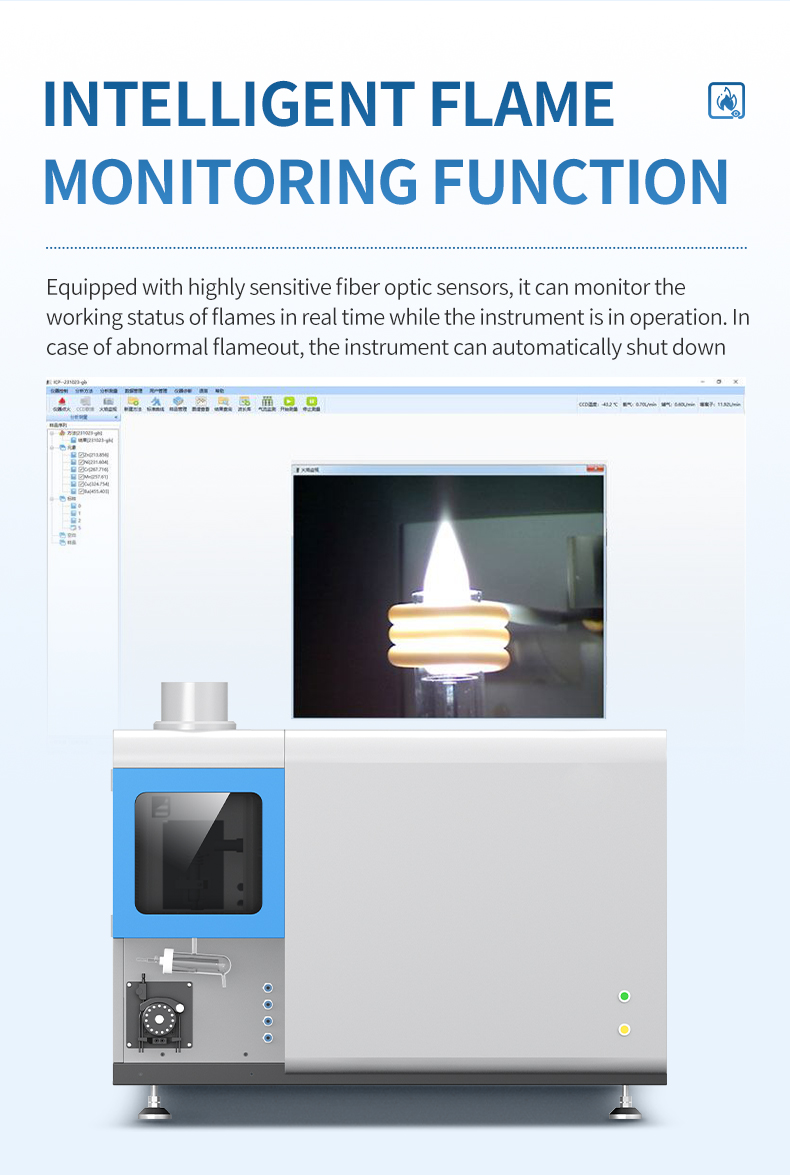
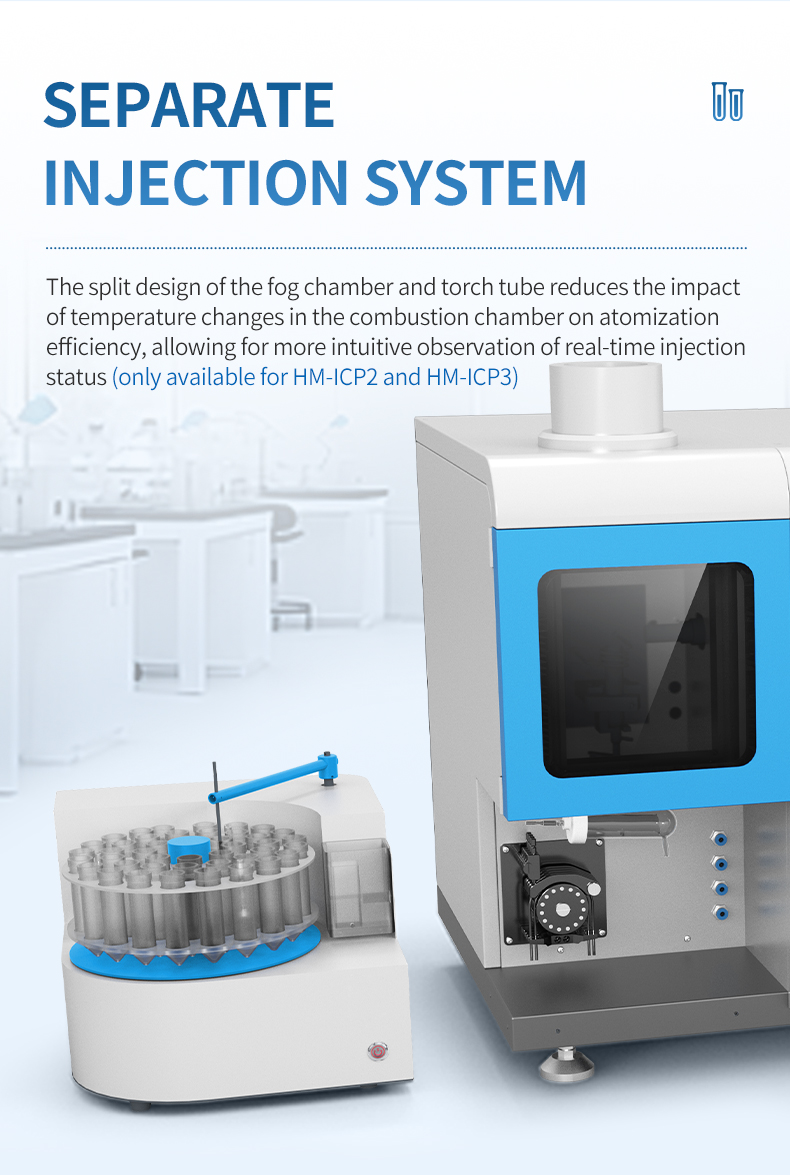
The split-chamber injection design separates the spray chamber from the torch compartment, preventing the torch's thermal radiation from affecting nebulization efficiency. This design also allows operators to visually monitor the sample introduction process in real time, quickly identifying clogs or unstable nebulization before they compromise data quality. A built-in full-color camera provides live plasma observation through the software, enabling remote assessment of torch condition and plasma stability.
Applications
-
Environmental compliance testing — simultaneous determination of heavy metals (As, Cd, Cr, Cu, Hg, Ni, Pb, Zn) in wastewater, drinking water, and soil digests per EPA and local regulatory methods
-
Food safety screening — rapid multi-element profiling of agricultural products, processed foods, and beverages for nutritional minerals and contaminant metals
-
Metallurgical quality control — alloy composition verification and impurity element screening in steel, aluminum, copper, and specialty alloys
-
Geological exploration — ore grade determination and trace element mapping for rare earth and precious metal deposits
-
Chemical process monitoring — real-time element tracking in catalyst production, reagent purification, and industrial process streams
-
Pharmaceutical elemental impurity testing — screening per ICH Q3D guidelines for Class 1, 2A, and 2B elemental impurities
-
Semiconductor material analysis — trace contamination detection in high-purity silicon, gallium arsenide, and related materials
-
Agricultural research — soil nutrient profiling and fertilizer composition analysis for crop optimization studies
-
Clinical and biomedical research — trace element determination in biological fluids and tissue samples
Key Features & Advantages
-
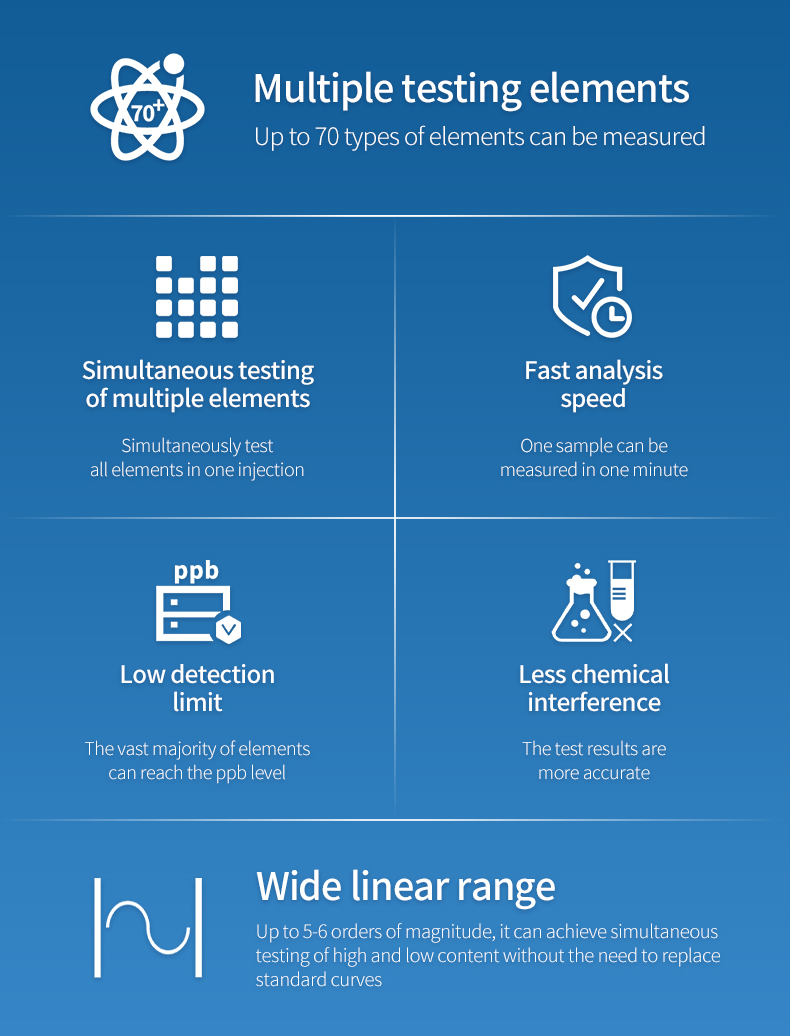
One-exposure full-spectrum acquisition — 165–900nm captured in a single 20-second CCD readout; no sequential scanning delay between wavelengths
-
Million-pixel CCD with -45°C cooling — three-stage TEC with <3 minute startup; per-pixel anti-saturation spill-over protection handles wide concentration ranges
-
70+ elements in under one minute — ≥50 elements per minute throughput; single sample consumption <2mL for comprehensive analysis
-
Echelle-prism optics with ≤0.007nm resolution — no moving parts for drift-free operation; sealed constant-temperature chamber at 36°C ±0.1°C
-
Automatic wavelength calibration — uses built-in C, N, Ar emission lines at every startup; no external calibration solution or consumables needed
-
Split-chamber injection system — isolates spray chamber from torch compartment to prevent thermal cross-effects; enables direct visual monitoring of nebulization
-
Real-time color plasma camera — software-integrated full-color video feed for remote observation of torch condition and plasma stability during runs
-
Intelligent auto-attenuation — software automatically adjusts for up to 100x concentration differences; eliminates manual dilution of high-concentration samples
-
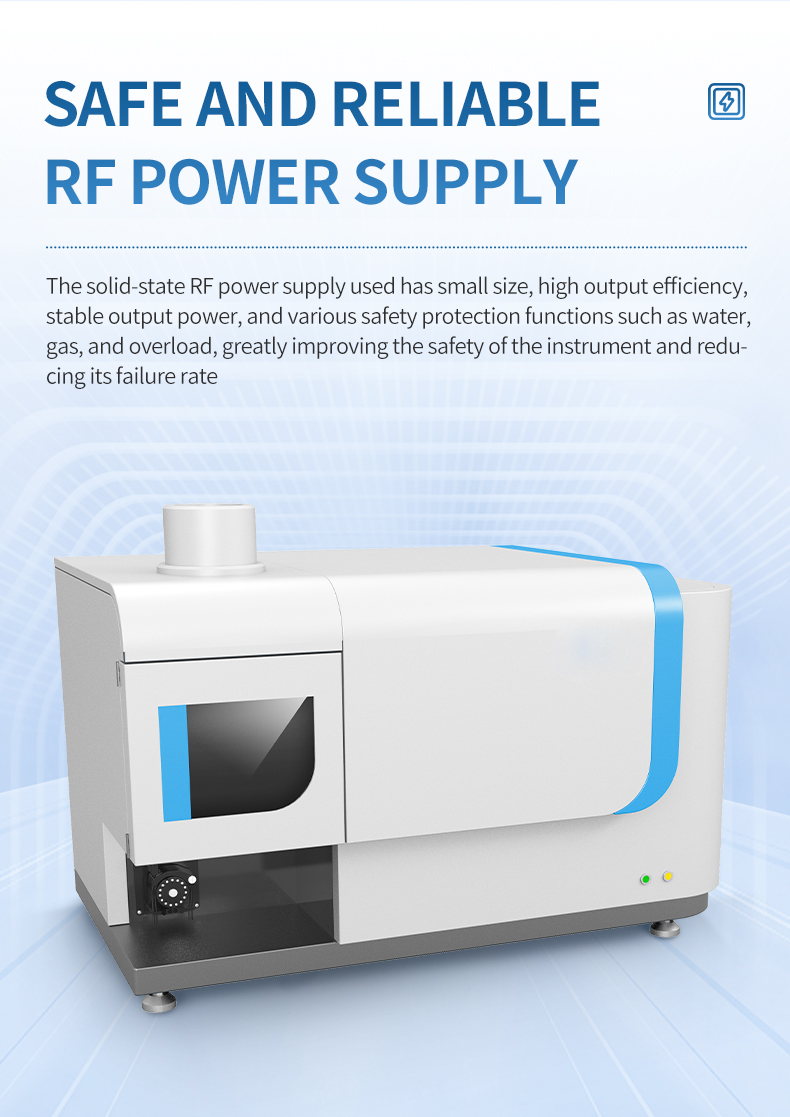
Digital RF generator with 1W resolution — 500–1600W range with ≤0.01% power stability; fast automatic impedance matching
-
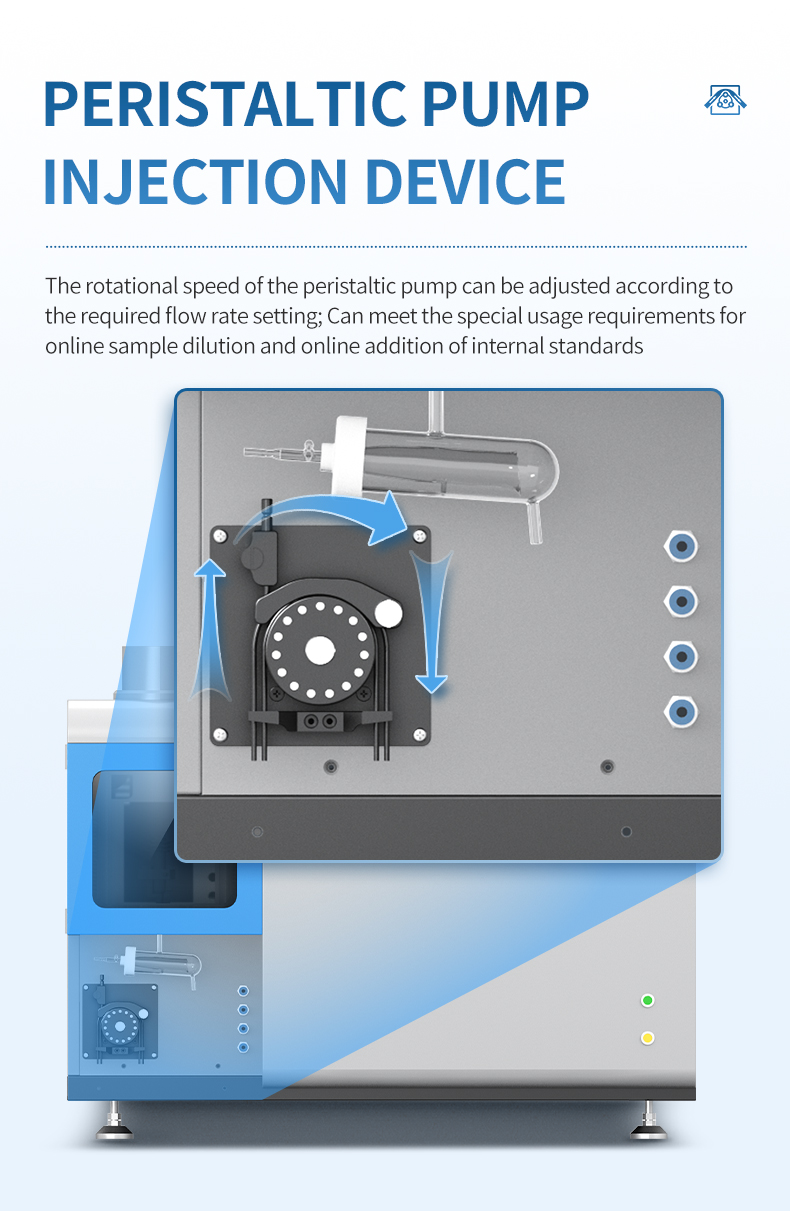
5-channel 16-roller peristaltic pump — supports simultaneous sample introduction, waste drainage, internal standard addition, and reagent injection
-
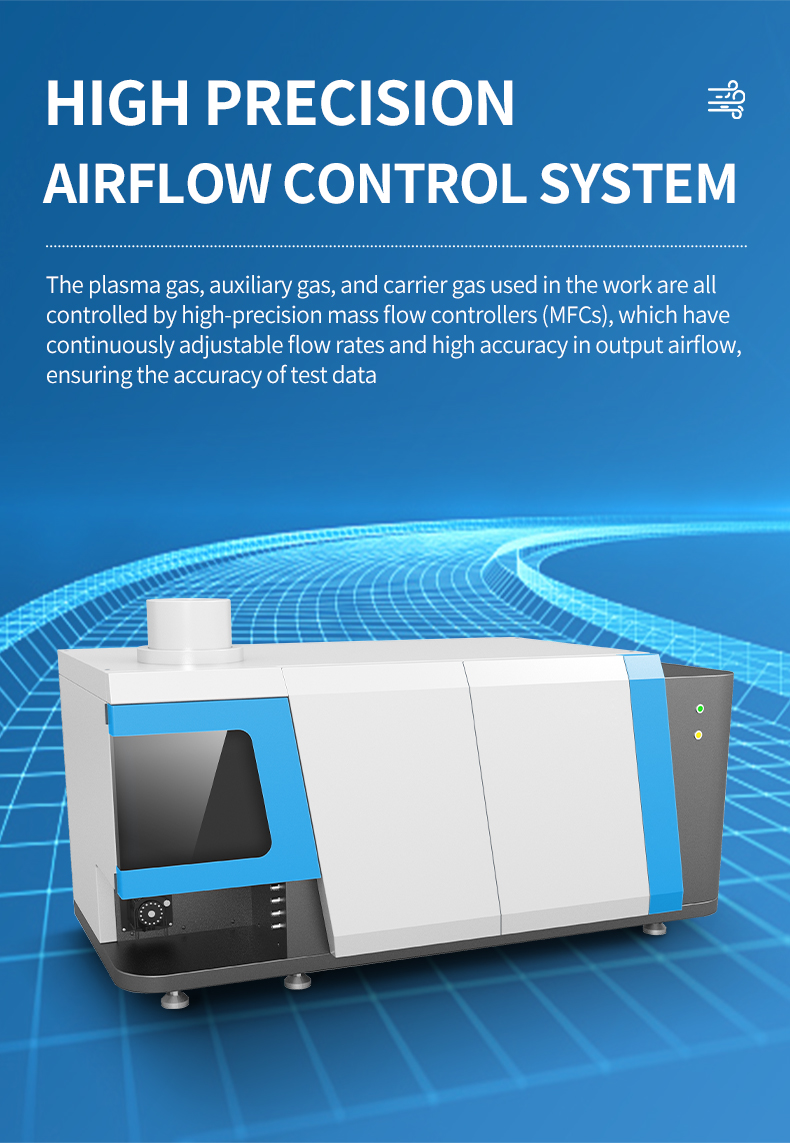
High-precision MFC gas control — 0.01L/min accuracy with auto-shutdown and audible alarm on gas supply loss
-
Smart integration design — signal and background acquired simultaneously; high and low intensity signals processed in parallel for optimal signal-to-noise ratio
-
75,000+ spectral line library — 30 selectable pixels per line; open database for custom method development
-
Multiple interference correction methods — external standard, internal standard, IEC inter-element correction, and standard addition; real-time background subtraction
-
Full spectrum acquisition mode — retrieve complete spectral data for any sample to assess interferences and confirm results post-analysis
-
Audit trail capability — optional multi-user permission levels with complete operation log for regulated environments
Technical Specifications
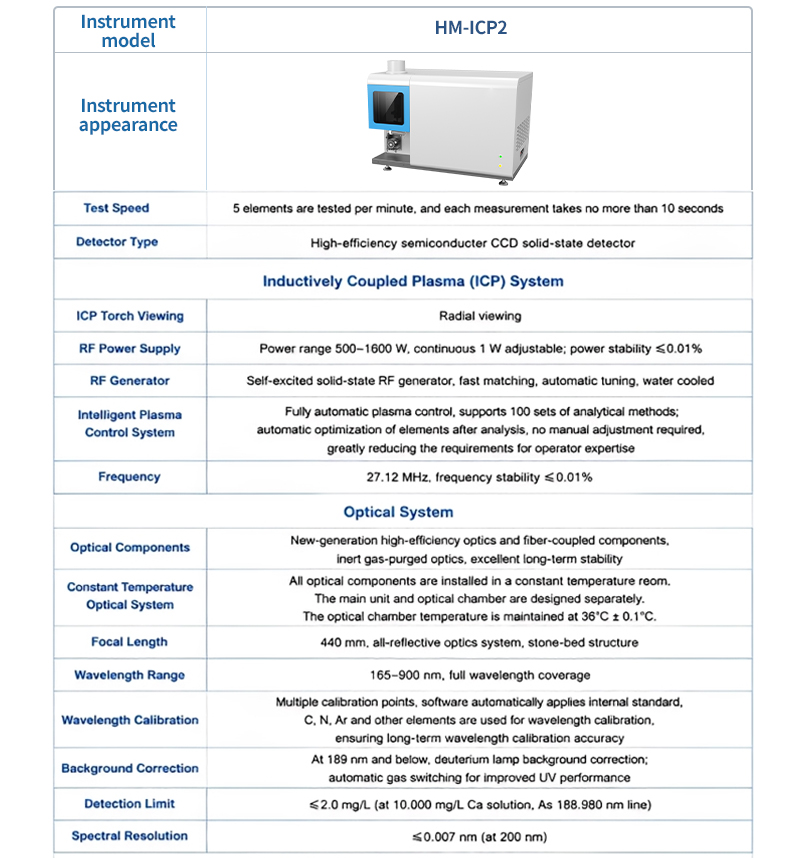
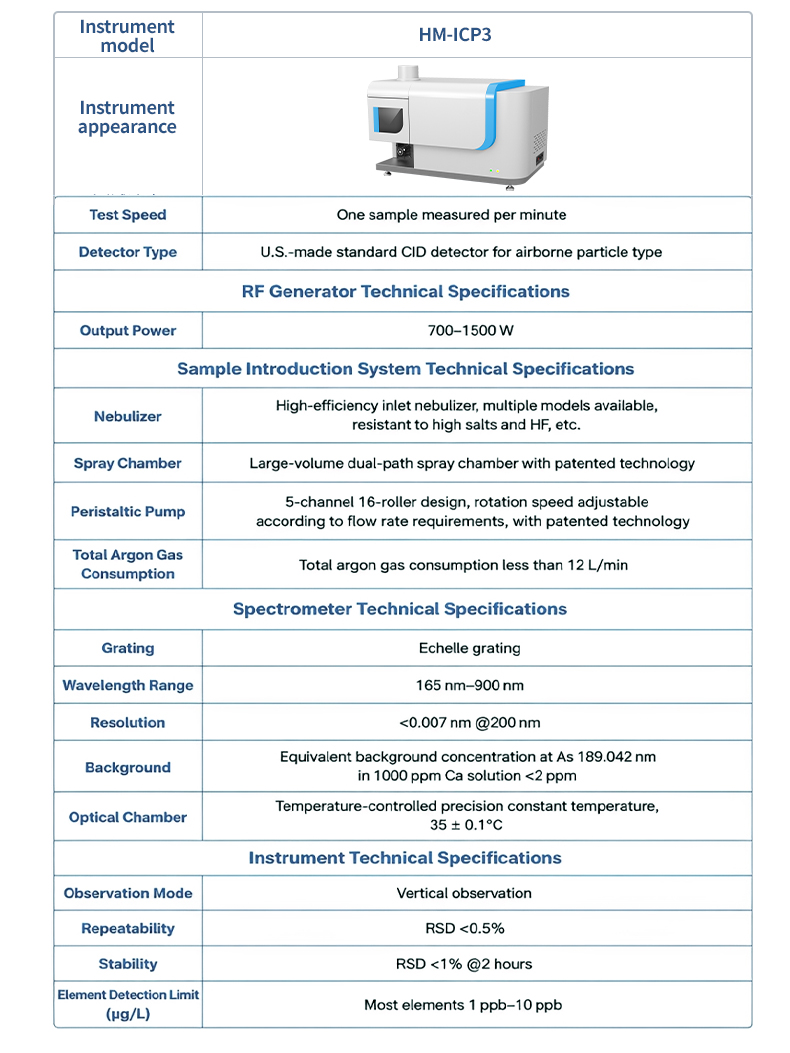
| Parameter | Specification |
|---|---|
| Model | HM-ICP2 |
| Technique | Full-Spectrum Simultaneous ICP-OES with CCD Detection |
| Plasma Viewing | Vertical torch (radial viewing) |
| RF Power Range | 500–1600W, continuous 1W adjustable |
| Power Stability | ≤0.01% |
| RF Generator | Self-excited solid-state; fast matching, auto tuning, water cooled |
| Auto Attenuation | Up to 100x concentration range |
| Frequency | >27.12 MHz |
| Frequency Stability | ≤0.01% |
| Optical System | Echelle grating + prism cross-dispersion; no moving parts |
| Focal Length | 440mm |
| Optical Chamber | Constant temperature 36°C ±0.1°C; argon purge; isolated from main unit |
| Wavelength Range | 165–900nm |
| Resolution | ≤0.007nm (at 200nm) |
| Stray Light | ≤2.0mg/L (10000mg/L Ca at As 188.980nm) |
| Wavelength Calibration | Auto calibration using C, N, Ar lines at each startup |
| Detector Type | CCD solid-state, million+ pixels |
| Detector Cooling | Three-stage TEC to -45°C; startup <3 min |
| Anti-Saturation | Back-drain spill-over protection per pixel |
| Peristaltic Pump | 5-channel, 16-roller, auto; speed continuously adjustable |
| Gas Path Control | MFC precision 0.01L/min; auto-shutdown on gas loss |
| Spectral Line Library | 75,000+ lines; 30 pixels per line selectable |
| Analysis Speed | ≥50 elements/min; each line ≥10s integration |
| Sample Consumption | <2mL for 70+ elements |
| Linear Dynamic Range | ≥10⁶ |
| Precision | RSD ≤0.5% (1ppm/10ppm multi-element, 10x) |
| Stability | RSD <1.0% (1ppm/10ppm multi-element, long-term) |
| Detection Limit | Typical elements down to 0.1 μg/L |
FAQ
Q1: How does simultaneous full-spectrum detection compare to sequential scanning for routine multi-element analysis?
A: Sequential scanning instruments measure one wavelength at a time, which means a 70-element method can take over 10 minutes per sample. The HM-ICP2 captures the entire 165–900nm spectrum in a single 20-second exposure, reading all elements simultaneously. This reduces analysis time to under one minute per sample, dramatically increasing daily throughput for laboratories running large batches of environmental or food safety samples.
Q2: What does the per-pixel anti-saturation protection do, and why does it matter?
A: In a CCD detector, when a strong signal pixel saturates, excess charge can spill over into adjacent pixels, corrupting their readings — a phenomenon called "blooming." The HM-ICP2's per-pixel back-drain protection prevents this spill-over. This means you can quantify both trace-level contaminants (at ppb concentrations) and major matrix elements (at percent levels) in the same exposure, without the strong signals interfering with the weak ones.
Q3: How does the split-chamber injection design improve analytical reliability?
A: In conventional ICP instruments, the spray chamber and torch share a single compartment, meaning heat radiating from the plasma torch can affect nebulization efficiency. The HM-ICP2 isolates these two zones, stabilizing the nebulization process. Additionally, operators can directly observe the nebulization plume, making it easy to spot clogs, sputtering, or other anomalies before they compromise analytical results — particularly valuable during long unattended batch runs.
Q4: Can the instrument handle samples with both trace impurities and high concentration elements?
A: Yes. The combination of per-pixel anti-saturation protection, intelligent auto-attenuation (up to 100x), and a linear dynamic range of ≥10⁶ means the instrument can quantify elements spanning from sub-ppb to percentage levels in a single measurement. The auto-attenuation function automatically adjusts the effective sensitivity for high-concentration elements, eliminating the need for manual dilution of samples with wide concentration gradients.
Q5: What wavelength calibration is needed for daily operation?
A: The HM-ICP2 performs automatic wavelength calibration at each startup using carbon, nitrogen, and argon emission lines naturally present in the plasma and ambient air. No external calibration solution or additional consumables are required. This auto-calibration ensures wavelength accuracy is maintained day-to-day without operator intervention, saving both time and reagent costs.
Q6: How does the real-time plasma camera benefit routine analysis?
A: The built-in full-color camera streams live plasma video directly in the control software. Operators can remotely verify that the plasma is properly ignited, monitor torch condition (detecting carbon buildup or clogging of the center tube), and confirm stable plasma geometry — all without opening the instrument enclosure. This is especially useful for overnight or unattended runs where early detection of plasma instability can prevent wasted samples and recalibration time.
Q7: What sample introduction options are available for different matrix types?
A: The HM-ICP2 supports multiple nebulizer, spray chamber, and torch configurations, including options for organic samples, high-salt solutions, high-sensitivity measurements, and HF-resistant setups. The 5-channel peristaltic pump allows simultaneous sample uptake, waste removal, internal standard addition, and reagent introduction (such as for hydride generation), providing flexibility to handle diverse sample matrices without hardware changes.
Article address:https://www.spectrometer.top/pro9/ccd-icp-oes-environmental-food-screening.html