 Current
location:
Current
location: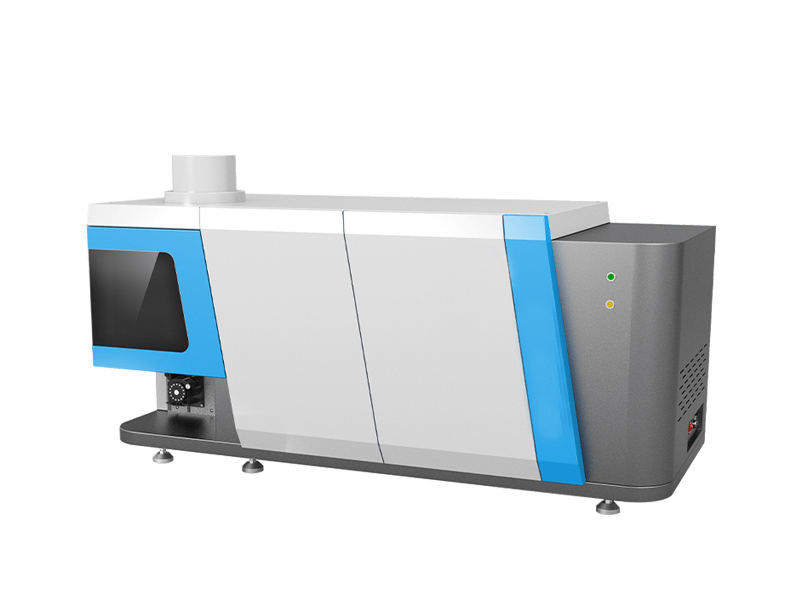
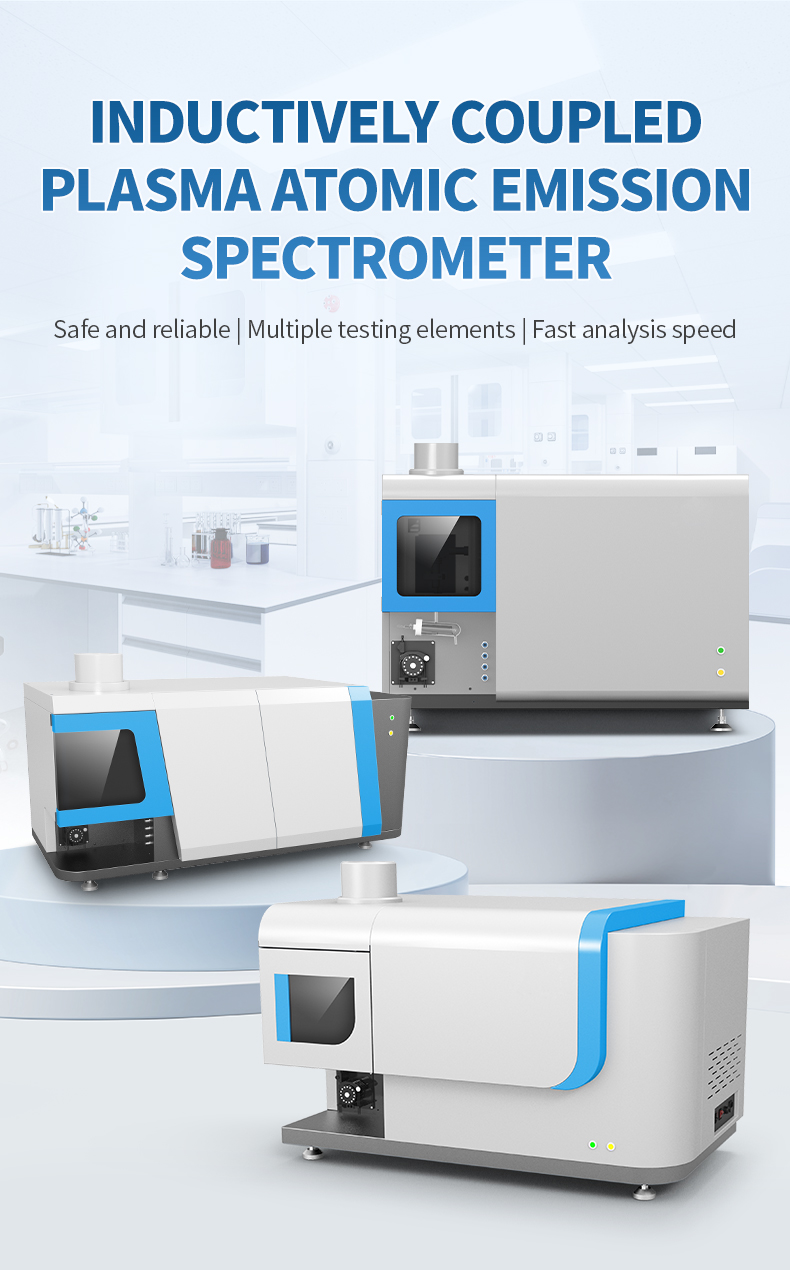



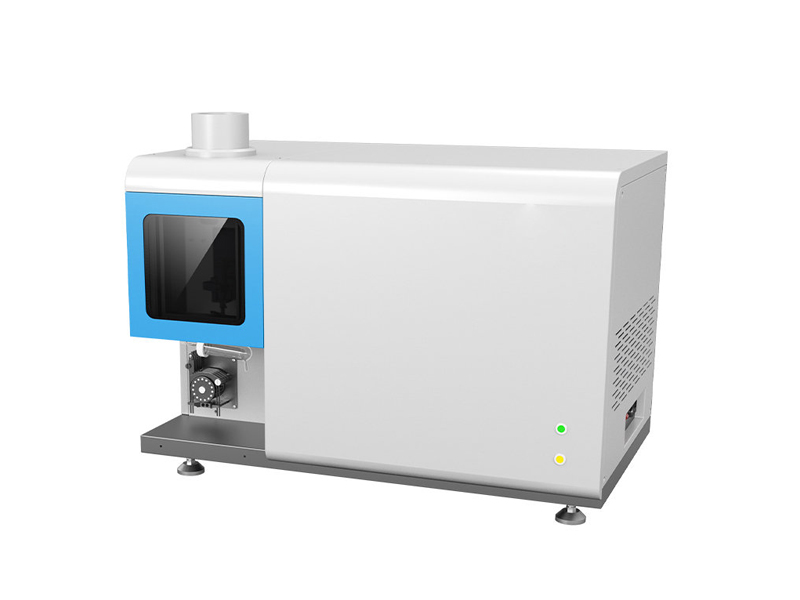
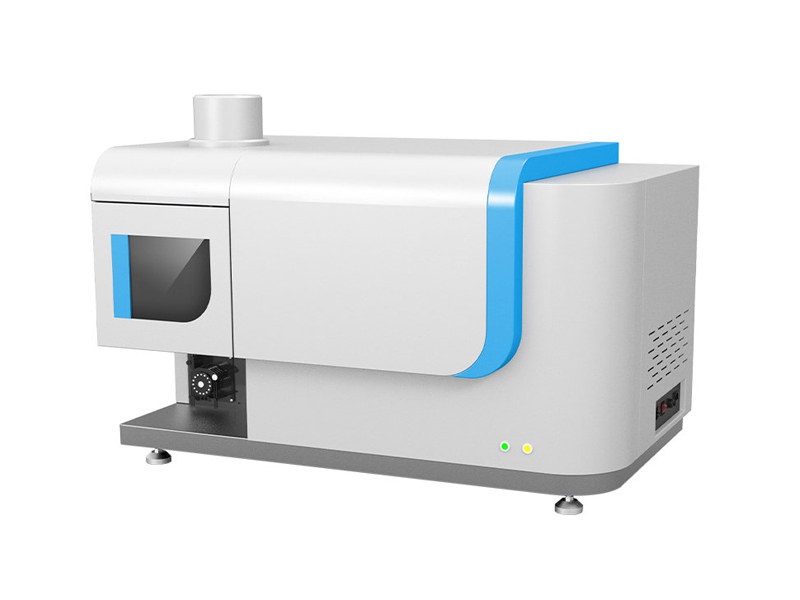
Product Introduction
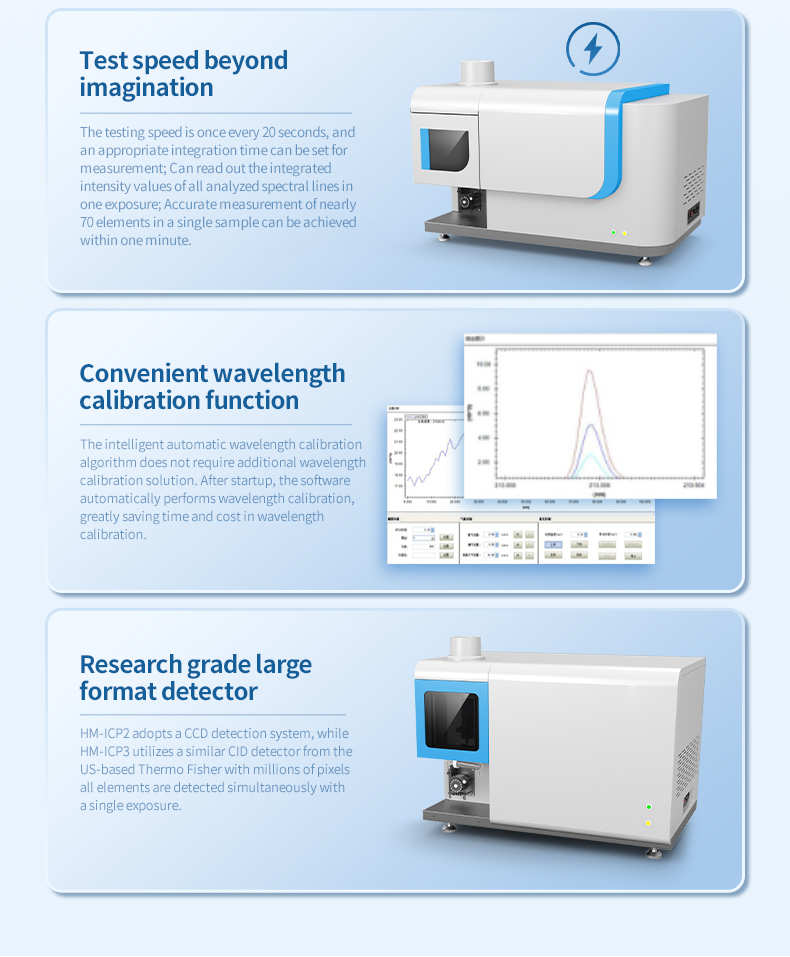
Elemental analysis in petrochemical laboratories faces persistent challenges: organic sample matrices cause carbon buildup in plasma torches, acid digestion of oils is time-consuming and introduces contamination risks, and high-purity argon requirements drive up daily operating expenses. The HM-ICP1 addresses these pain points with a purpose-built design for the petrochemical sector.
The instrument's direct oil sample introduction system couples a semiconductor-cooled spray chamber operating at -20°C with oxygen-assisted delivery. This combination suppresses carbon deposition that typically plagues organic sample analysis in conventional ICP instruments, allowing gasoline, diesel, lubricating oils, and other petroleum products to be injected directly without acid digestion. For laboratories processing dozens of oil samples daily, this translates into substantial time savings and reduced reagent consumption.
At the core of the detection system, dual photomultiplier tubes (R212/R928) with negative high voltage adjustable from -50 to -1000V provide the sensitivity needed for trace-level determinations. The 4320-groove imported grating achieves resolution within 0.005nm — fine enough to resolve spectral interferences between adjacent emission lines in complex oil matrices. The precision thermostat maintains the optical path at ±0.1°C, ensuring wavelength stability during extended batch runs.
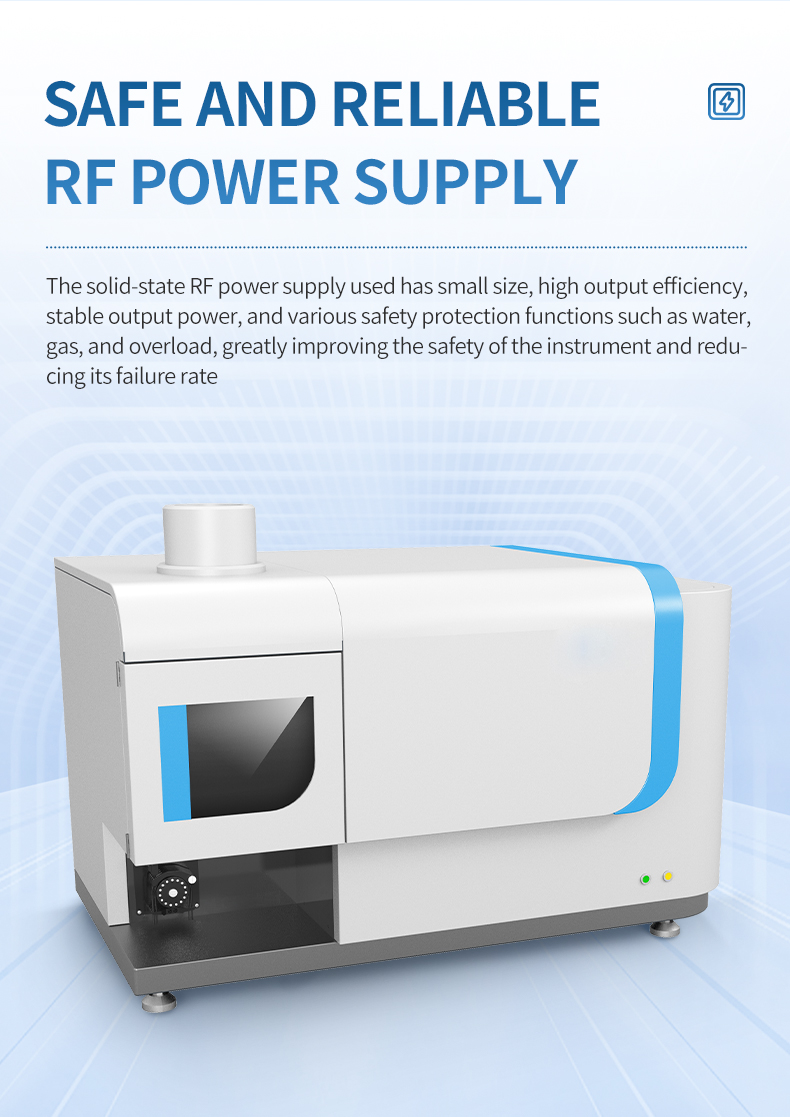
Operationally, the instrument runs on standard 99.99% argon gas rather than the 99.999% high-purity grade required by many competing systems, reducing gas costs by at least one-third. Full-auto ignition with impedance matching simplifies daily startup, while intelligent flame monitoring provides automatic shutdown protection against abnormal plasma conditions.
Applications
-
Refinery quality control — direct injection analysis of gasoline and diesel for Si, P, Fe, Mn, Pb, and other trace elements without sample pretreatment
-
Lubricant condition monitoring — determination of 20+ wear metal elements in lubricating oils and additives after simple dilution; optional high-salt nebulizer enables direct used-oil analysis
-
Crude oil assay — comprehensive multi-element profiling of 30+ elements in crude oil and associated byproducts
-
Petrochemical feedstock purity — elemental content verification in methanol, ethanol, and other intermediate materials
-
Automotive urea (DEF) testing — quantification of Na, K, Ca, Mg, Al, Fe, Ni, Cu, Zn, Cr in diesel exhaust fluid
-
Oilfield tracer studies — detection and quantification of rare earth element tracers in reservoir monitoring
Key Features & Advantages
-
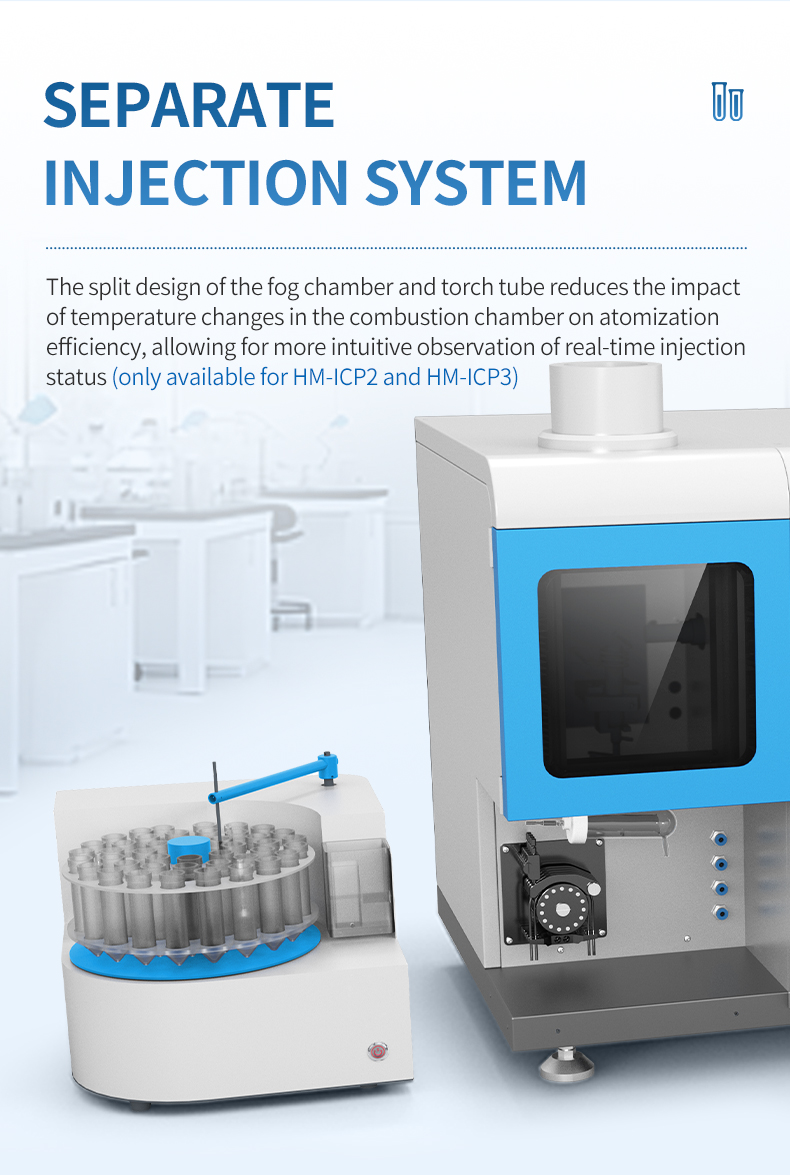
Direct oil injection with -20°C cooling — semiconductor-cooled spray chamber eliminates carbon deposition from organic samples; no acid digestion required for gasoline, diesel, or lubricating oils
-
Oxygen-assisted sample introduction — auxiliary oxygen flow prevents soot formation in the plasma torch during organic matrix analysis
-
4320-groove ultra-high resolution grating — achieves resolution within 0.005nm for clean spectral separation of overlapping emission lines in complex oil matrices
-
Dual PMT detection (R212/R928) — negative high voltage from -50 to -1000V allows optimization for each element; no detector cooling or purge gas needed
-
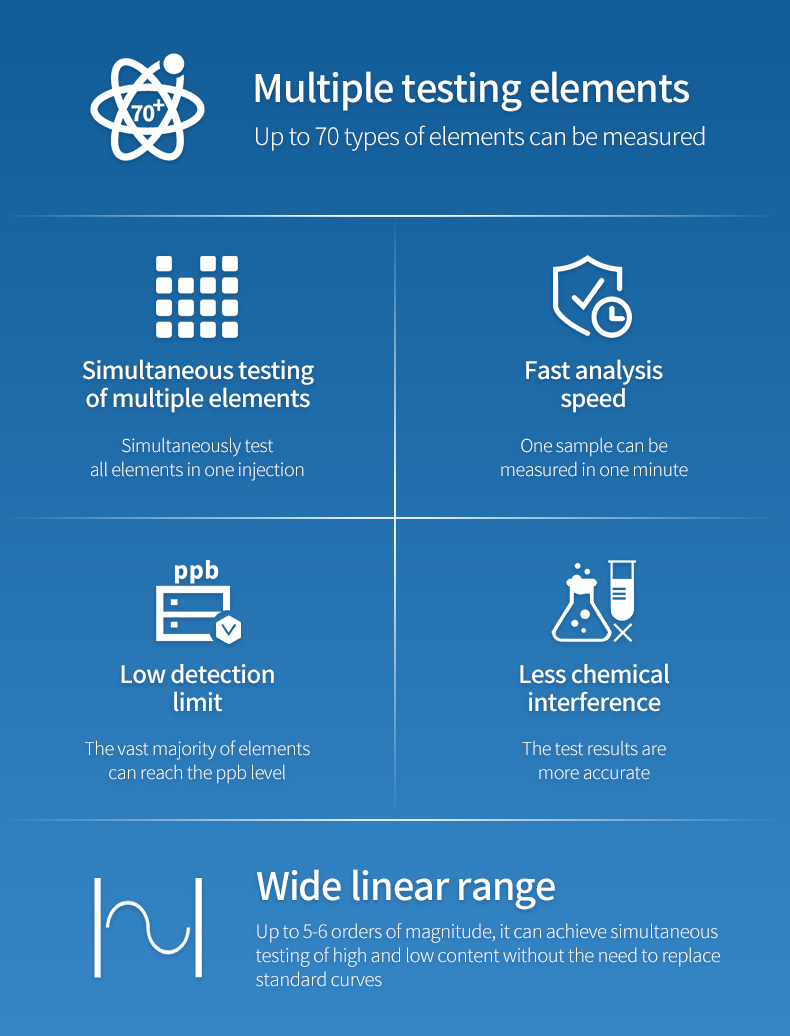
70+ element coverage with ppb-level detection — suitable for trace impurity screening and major component quantification in a single run
-
5–6 orders of magnitude linear range — simultaneous high and low concentration measurement eliminates the need for serial dilutions or standard curve switching
-
99.99% argon gas operation — eliminates the cost of 99.999% high-purity argon, reducing daily gas expenses by at least one-third
-
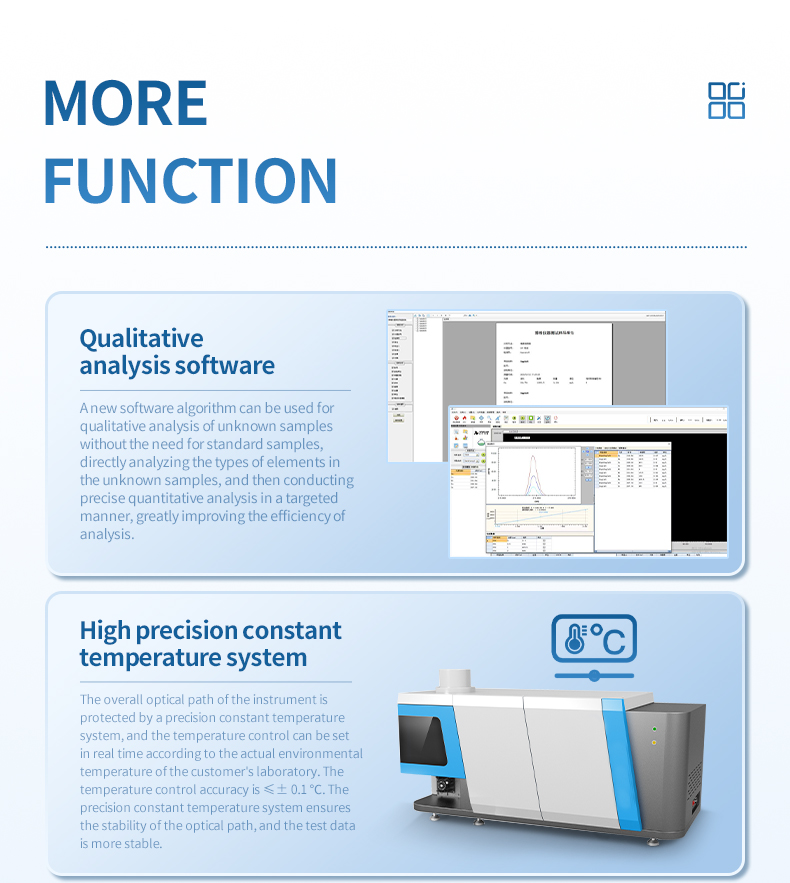
Precision thermostat at ±0.1°C — maintains optical path stability for consistent wavelength accuracy across long batch sequences
-
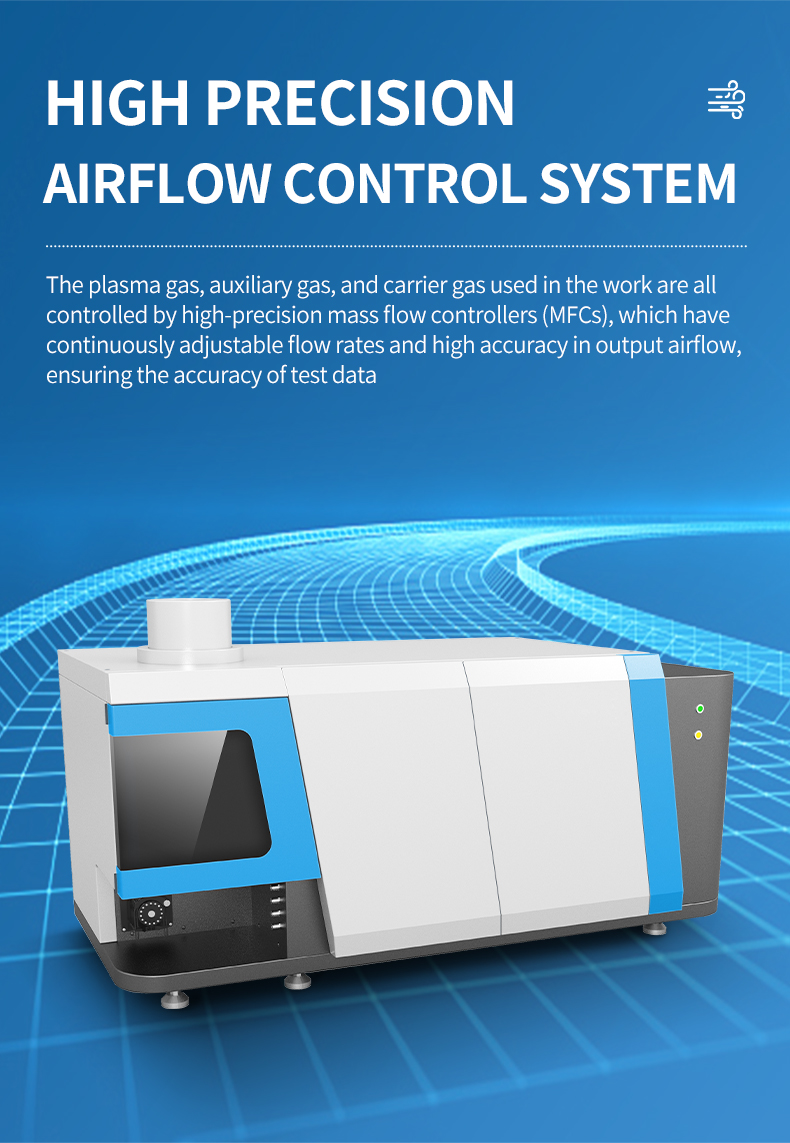
High-precision MFC gas control — plasma gas, auxiliary gas, carrier gas, and oxygen all managed by mass flow controllers with continuous adjustability
-
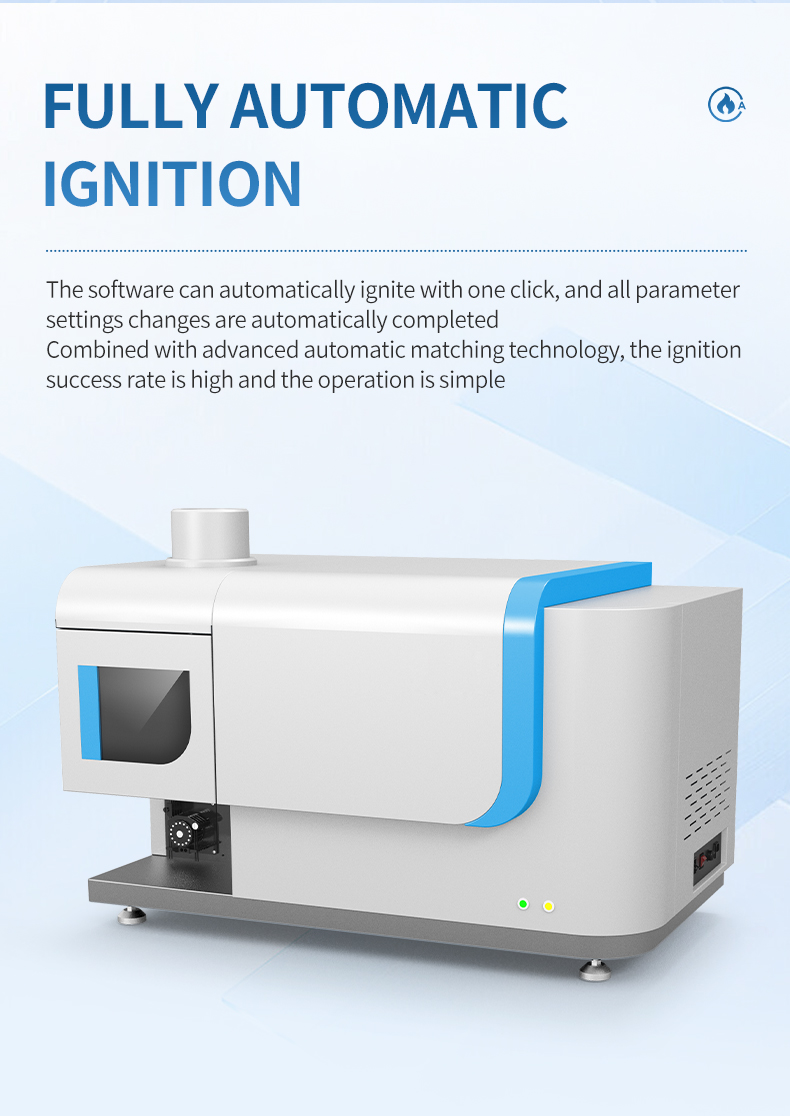
Full-auto one-click ignition with impedance matching — reliable plasma startup without manual tuning
-
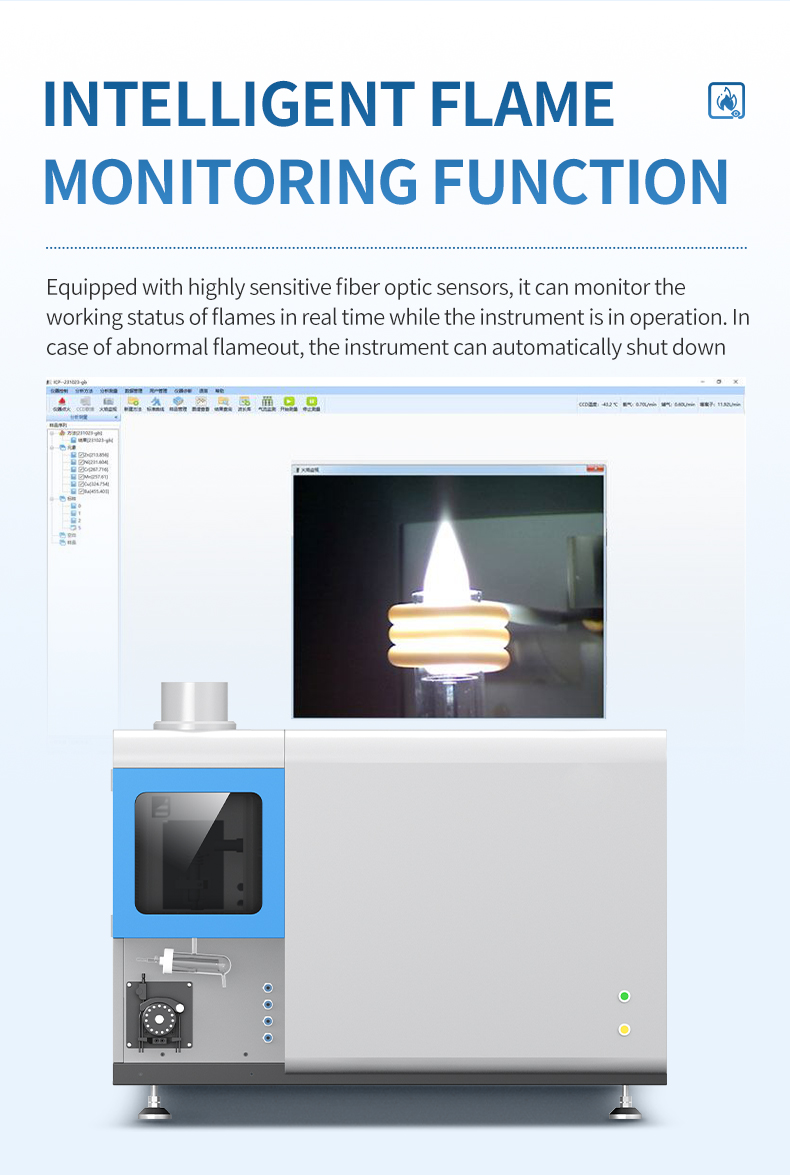
Intelligent flame monitoring with auto shutdown — fiber optic sensor detects abnormal flameout and immediately closes the RF power supply
-
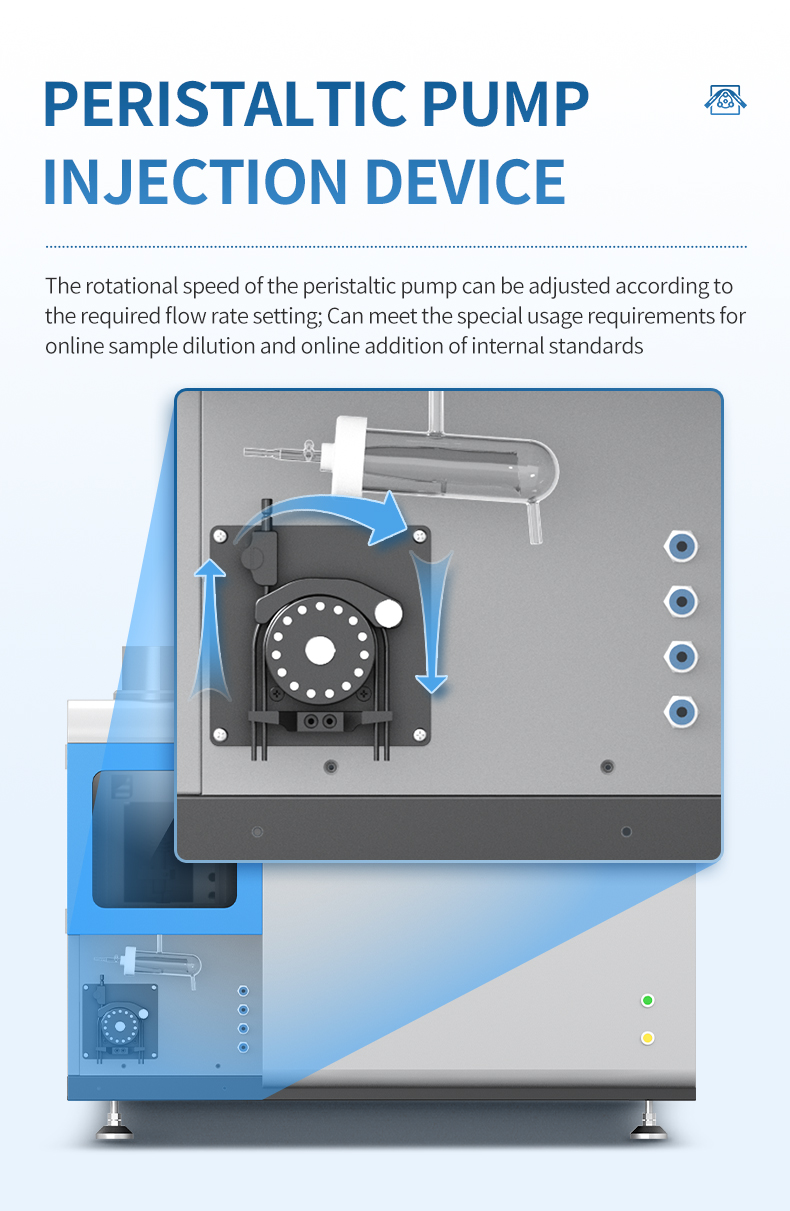
4-channel 12-roller peristaltic pump — steady sample uptake with continuously adjustable speed for different oil viscosities
-
2D observation position adjustment — software-controlled torch positioning with signal feedback locates optimal viewing height for each method
-
Czerny-Turner optical path with 1000mm focal length — long focal length delivers high dispersion for clean spectral resolution
-
Scanning speed of 5–10 elements per minute — adequate throughput for targeted petrochemical method workflows
-
VF conversion signal acquisition — robust analog-to-digital conversion for stable photometric measurements
Q1: Can the HM-ICP1 analyze gasoline and diesel directly without acid digestion?
A: Yes. The HM-ICP1 is specifically designed with a direct oil sample introduction system. The semiconductor-cooled spray chamber operates at -20°C, and oxygen-assisted injection prevents carbon buildup in the plasma torch. Gasoline and diesel can be introduced directly after simple dilution, eliminating the need for time-consuming acid digestion procedures. This is one of the instrument's primary advantages for petrochemical laboratories.
Q2: What argon gas purity is required for daily operation?
A: The HM-ICP1 operates on standard 99.99% purity argon gas, unlike many ICP spectrometers that require 99.999% high-purity argon. This reduces gas procurement costs by at least one-third. The instrument achieves this by eliminating the need for extended plasma pre-warmup and optical path purging, as the PMT detector does not require purge gas for operation.
Q3: How does the 4320-groove grating improve analysis of complex oil matrices?
A: Oil samples contain many elements whose emission lines are closely spaced in the spectrum. The 4320-groove imported grating achieves resolution within 0.005nm — significantly finer than the 0.008nm typical of standard ICP instruments. This higher resolution separates overlapping spectral lines more effectively, reducing the risk of false readings from spectral interferences and producing more accurate quantification in multi-element oil analysis.
Q4: What types of lubricating oil analysis can this instrument perform?
A: The HM-ICP1 can analyze both fresh lubricating oils and used lubricants. For fresh oils and additives, simple dilution followed by direct injection allows determination of 20+ wear metal elements. For used lubricants with higher particulate content, an optional high-salt nebulizer is available for direct analysis. The ppb-level detection limits ensure even trace-level wear metals are reliably quantified for condition monitoring programs.
Q5: How does the -20°C sample cooling prevent analysis issues with volatile oil samples?
A: Petroleum products like gasoline are highly volatile at room temperature, which can destabilize the plasma and cause inconsistent nebulization. By cooling the sample to -20°C before introduction, the volatility is suppressed, ensuring stable aerosol generation and consistent transport into the plasma. This results in more stable emission signals and improved measurement precision for volatile organic samples.
Q6: What is the throughput for a typical petrochemical quality control batch?
A: The sequential scanning mode analyzes 5–10 elements per minute. For a typical QC method targeting 8–12 elements per sample, each sample requires approximately 1–2 minutes of measurement time. Combined with the direct injection capability that eliminates sample preparation (apart from simple dilution), a laboratory can process a significantly larger daily sample volume compared to methods requiring acid digestion.
Technical Specifications
Parameter
Specification
Model
HM-ICP1石化
Technique
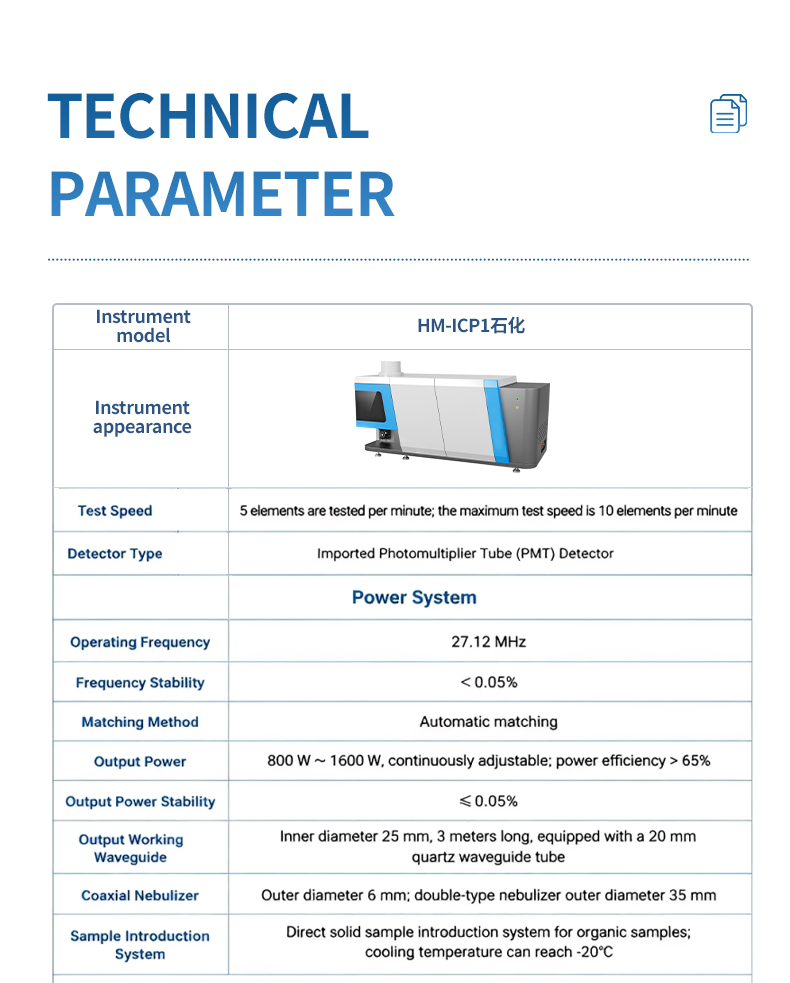
Sequential Scanning ICP-OES with PMT Detection
Working Frequency
27.12 MHz
Frequency Stability
<0.05%
Matching Method
Automatic matching
Output Power
800–1600W, continuously adjustable; power efficiency >65%
Output Power Stability
≤0.05%
Working Coil
Inner diameter 25mm, 3 turns
Quartz Torch Tube
Three concentric, outer diameter 20mm
Coaxial Nebulizer
Outer diameter 6mm
Spray Chamber
Cyclonic type
Organic Sample Introduction
Direct injection with cooling to -20°C
Optical Path
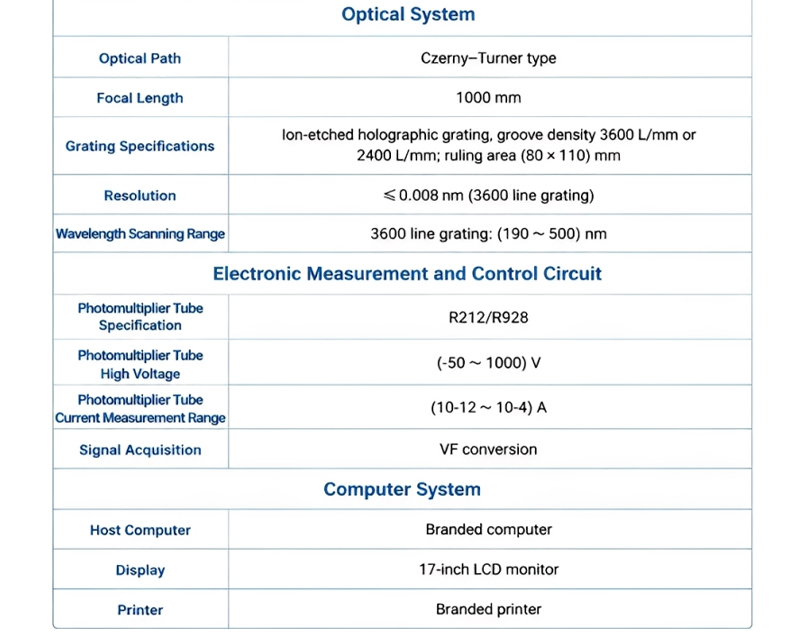
Czerny-Turner type
Focal Length
1000mm
Grating Specification
Ion-etched holographic grating; groove density 3600L/mm or 2400L/mm; ruling area 80×110mm
Resolution
≤0.008nm (3600L/mm grating); within 0.005nm (4320-groove grating)
Scanning Wavelength Range
190–500nm (3600L/mm grating)
PMT Specification
R212/R928
PMT Negative High Voltage
-50 to -1000V
PMT Current Range
10⁻¹² to 10⁻⁴ A
Signal Acquisition
VF conversion
Peristaltic Pump
4-channel, 12-roller, continuously adjustable speed
Gas Requirement
99.99% argon
Detectable Elements
70+
Analysis Speed
5–10 elements/min
Detection Limits
ppb level (most elements)
Linear Range
5–6 orders of magnitude
FAQ
Article address:https://www.spectrometer.top/pro9/oil-injection-icp-petrochemical-metal-analysis.html
- Previous: no more
- Next: Full Spectrum ICP-OES with CCD Detection for Environmental and Food Safety Screening