
 Current
location:
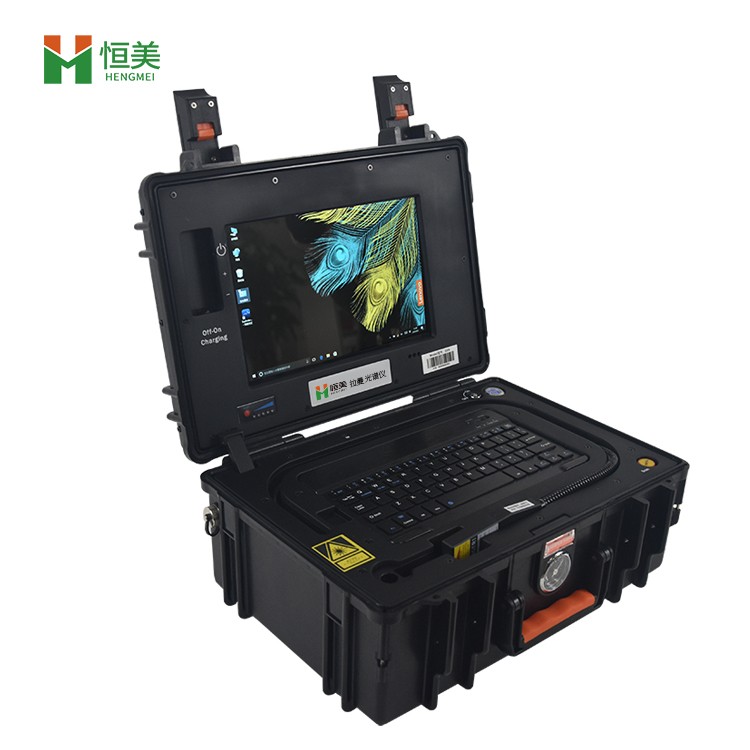
A portable Raman result needs a suitable measurement geometry and a relevant reference spectrum or validated analytical method. HM-LM uses a 785 nm excitation source. Sample fluorescence, containers and mixtures can influence the spectrum and its interpretation.
HM-LM is part of the HENG MEI Intelligent Manufacturing range supplied by Shandong Hengmei Electronic Technology Co., Ltd.
How the measurement works
HM-LM acquires Raman spectra using 785 nm excitation over a 180–3300 cm⁻¹ Raman-shift range. A suitable spectrum and relevant reference library support material identification. Prepared quantitative assays add their corresponding sample chemistry and calibration.
Set up the analytical workflow
- Choose the application method and prepare the required reference or control.
- Position the sample using the specified accessory and measurement geometry.
- Acquire the spectrum with appropriate power and acquisition settings.
- Review signal quality, library relevance and any mixture or fluorescence limitations before reporting.
Technical configuration
| Parameter | Specification |
|---|---|
| Excitation wavelength | 785 nm |
| Raman-shift range | 180–3300 cm⁻¹ |
| spectral resolution | 9 cm⁻¹ |
Plan acquisition settings within the sample method
When a protocol acquires five spectra for a location, retain each acquisition and the defined averaging or review rule. A longer acquisition can affect signal and the time spent at a point, while sample heating and changing chemistry also require attention. Select acquisition time and laser power through the application procedure and laser safety instructions.
Review spectral quality before accepting a match
Assess background, usable Raman bands and reference relevance together. A mixture may produce contributions from several materials, and container features can enter the acquired spectrum. Retain the original spectrum, acquisition settings and interpretation so the identification can be reviewed with the sample context.
Prepare a material-identification decision process
Define the material question before collecting spectra. Select the presentation method and reference coverage that suit the expected samples and packaging. Retain background and reference checks as required by the application procedure. Review an ambiguous match with the original spectrum, signal quality and sample context available together. Where the result has an important operational consequence, define the follow-up or confirmation route in advance. A useful Raman record connects the sampled object to its acquisition conditions and the interpretation rule, helping different operators make consistent decisions from comparable evidence.
Define identification and quantitative tasks separately
For material identification, specify the materials, sample presentation and relevant reference coverage. For a quantitative target, specify the matrix, preparation and calibration procedure. Evaluate packaging, fluorescence and mixture effects using representative samples. Choose accessories and power settings that suit the actual measurement geometry and material.
Investigate unexpected results
| Observed issue | Checks and follow-up |
|---|---|
| Fluorescence dominates the spectrum | Review sample presentation and the application-approved measurement conditions. |
| A library match is ambiguous | Review spectral quality, mixture context and reference coverage. |
| The container affects the result | Evaluate the sample-container combination and permitted accessory. |
Keep a usable analytical record
Retain these details with the result so the preparation, measurement and subsequent review can be reconstructed.
- Sample and presentation
- Laser power and acquisition settings
- Original spectrum and reference library
- Interpretation and application controls
Technical questions from operators
Can any sample be measured through any container?
Evaluate the actual container material, sample and measurement geometry.
Is a library score sufficient by itself?
Review the spectrum, reference coverage, sample context and the decision criteria of the application method.
Use the required controls and the method settings for each sample group, and preserve the original observations alongside the accepted result and review action.
Article address:https://www.spectrometer.top/news/portable-raman-measurements-and-spectral-libraries.html