 Current
location:
Current
location:
1. Review Background & Methodology
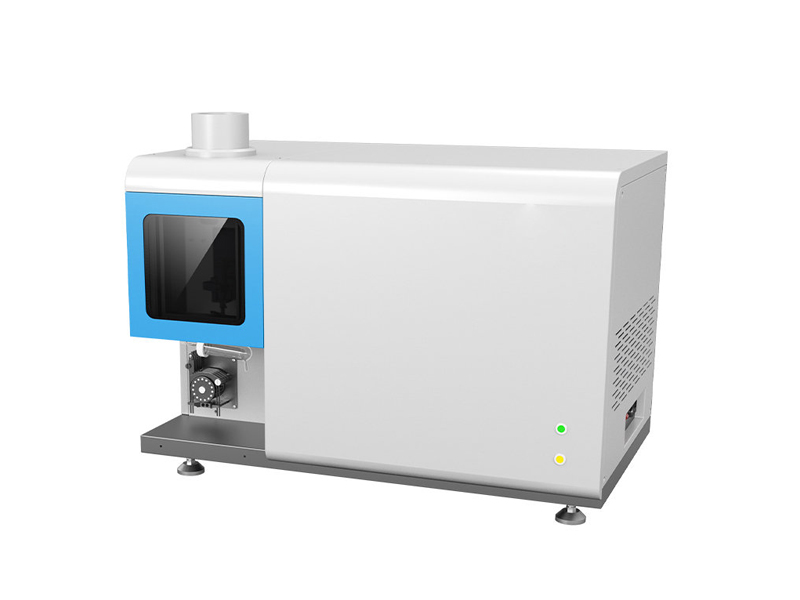
The decision to acquire an ICP-OES (Inductively Coupled Plasma Optical Emission Spectrometry) spectrometer represents one of the most consequential capital investments a laboratory can make. The instrument will likely remain in active service for a decade or more, and its true financial impact extends well beyond the initial purchase price. Consumables, service contracts, downtime, argon gas consumption, and staff training all shape the real cost experienced over the instrument's working life.
This review was prepared to help laboratory procurement teams, analytical chemists, and institutional managers evaluate HM Instruments' ICP-OES product line against two of the most widely respected international manufacturers: Agilent Technologies and Thermo Fisher Scientific. Both of those companies have established extraordinary reputations over decades of instrument development, and any fair comparison must acknowledge their contributions before examining cost differentials.
The methodology applied here draws on published instrument specifications, publicly available pricing ranges gathered from distributor quotes and product literature as of early 2025, standard argon gas pricing in major Asian and North American markets, and typical service-contract structures offered by each manufacturer. Where precise figures are unavailable, conservative industry estimates are used and clearly labeled as such. All dollar figures are expressed in USD unless otherwise noted.
The analysis is organized into four major dimensions:
Acquisition cost — the list-price or typical purchase price of each instrument system
Technical performance — a side-by-side specification comparison covering resolution, wavelength range, detector technology, stability, and detection limits
5-year total cost of ownership (TCO) — incorporating gas consumption, maintenance, spare parts, service fees, and estimated downtime costs
Return on investment (ROI) — an illustrative model for laboratories that charge fees or calculate internal cost recovery per sample
This review does not claim that any instrument is universally better than another. Instrument selection should always be driven by the specific analytical requirements, throughput needs, regulatory environment, and support infrastructure of the laboratory in question. The goal here is to provide transparent, structured data that supports informed decision-making.
2. A Tribute to International Brand Leadership
Before presenting any comparative data, it is appropriate — and genuinely warranted — to recognize the extraordinary technological contributions made by Agilent Technologies and Thermo Fisher Scientific to analytical instrumentation.
Agilent Technologies
Agilent Technologies, spun off from Hewlett-Packard in 1999, has invested decades and billions of dollars in the development of ICP-OES and ICP-MS platforms. The Agilent 5900 SVDV ICP-OES represents the current expression of that accumulated knowledge, featuring dual-view plasma observation (simultaneous axial and radial), an advanced charge-injection device (CID) detector, and Agilent's proprietary SVDV (Simultaneous Vertical Dual View) technology. This design enables the instrument to handle complex matrices with reduced matrix effects and to deliver exceptional dynamic range in a single run. Agilent's software ecosystem — particularly the ICP Expert software platform — is widely regarded as among the most intuitive and powerful in the industry. The company's global service network, laboratory support resources, and regulatory compliance documentation (critical for pharmaceutical and environmental labs) are benchmarks against which all other manufacturers are measured.
Thermo Fisher Scientific
Thermo Fisher Scientific's analytical instruments division has roots going back decades through predecessor companies including Thermo Electron and Jarrell-Ash. The iCAP series of ICP-OES instruments, including the iCAP 7400, embodies the results of sustained investment in optical engineering, plasma stability, and software integration. The iCAP 7400 uses an echelle polychromator with a CID detector — a detector architecture that Thermo Fisher helped pioneer and refine for ICP-OES applications. The instrument's axial plasma view, combined with precise temperature management of the optical bench, achieves the low stray light and high spectral resolution that modern multi-element analysis demands. Thermo Fisher's GREENFIELD Plasma technology and its commitment to reducing environmental footprint while maintaining performance set a standard for the industry. Their global footprint of application specialists, training centers, and certified service engineers reflects a level of organizational investment that supports customers throughout the instrument lifecycle.
PerkinElmer
PerkinElmer, another pioneer in atomic spectroscopy, has contributed foundational advances in sequential ICP-OES technology and continues to serve segments of the market — particularly in environmental testing and food safety — where its instruments have built long track records of reliability. The company's WINLAB32 software and its tradition of application support for regulatory compliance workflows remain valued by many laboratory communities worldwide. PerkinElmer's long history of developing reference methods alongside regulatory agencies has cemented its role as a trusted partner for compliance-oriented laboratories.
These three companies together have shaped the analytical chemistry field. Their instruments are supported by extensive peer-reviewed application literature, multi-year warranty and service ecosystems, and global application support teams. For laboratories that operate under strict regulatory validation frameworks, or that require comprehensive global support, these companies remain natural choices. The cost differential discussed in this review must always be weighed against those considerations.
3. Acquisition Cost Comparison
The most immediately visible difference between HM Instruments and the established international brands is the capital acquisition cost. The table below summarizes typical purchase price ranges based on distributor quotations and published price lists for standard configurations (axial or dual-view plasma, standard autosampler, software license).
| Instrument | Manufacturer | Typical Purchase Price (USD) | Notes |
|---|---|---|---|
| HM-ICP1 | HM Instruments | ~$39,000 | Axial view; PMT detector; petroleum/petrochemical focus |
| HM-ICP2 | HM Instruments | ~$48,000 | Axial view; CCD detector; general analytical use |
| HM-ICP3 | HM Instruments | ~$56,000 | Axial/radial view; CID detector; high-performance configuration |
| Agilent 5900 SVDV | Agilent Technologies | ~$120,000 – $150,000 | Dual-view; CID detector; standard software suite included |
| Thermo Fisher iCAP 7400 | Thermo Fisher Scientific | ~$110,000 – $130,000 | Axial view; CID detector; Qtegra ISDS software |
| PerkinElmer Avio 550 | PerkinElmer | ~$100,000 – $125,000 | Dual-view; SCD detector; WinLab32 software |
The HM-ICP3, HM Instruments' most capable configuration, is priced at approximately $56,000 — representing a capital saving of roughly $54,000 to $94,000 relative to an Agilent 5900, and $54,000 to $74,000 relative to a Thermo Fisher iCAP 7400, depending on option packages and regional pricing.
For laboratories operating under constrained capital budgets — including university research departments, government environmental monitoring agencies, industrial quality control labs in emerging markets, and contract laboratories managing thin margins — this differential is substantial. It may determine whether an ICP-OES purchase is approved at all, or whether a laboratory can afford to equip multiple analysis stations rather than one.
It is worth noting that international instrument prices often include substantial software licensing fees, commissioning charges, and initial training costs that may be bundled differently. In practice, the fully-installed, operator-trained cost gap between HM Instruments and international brands may be somewhat narrower or wider depending on local distributor practices. Laboratories should request itemized quotations rather than relying on headline figures alone.
4. Technical Performance Comparison
A lower purchase price only represents value if the instrument delivers performance that is appropriate for the intended application. This section compares key technical specifications across the instrument families.
4.1 Spectral Resolution
Resolution is one of the most critical parameters in ICP-OES, as it determines the instrument's ability to separate adjacent spectral lines and reduce spectral interferences in complex matrices. Resolution is typically reported as the minimum resolvable peak width at half-maximum height (FWHM) at a specified wavelength.
| Instrument | Spectral Resolution (FWHM) |
|---|---|
| HM-ICP3 | ≤ 0.007 nm (at 200 nm) |
| Thermo Fisher iCAP 7400 | ≤ 0.007 nm (at 200 nm) |
| Agilent 5900 SVDV | ≤ 0.007 nm (at 200 nm, typical) |
| HM-ICP2 | ≤ 0.008 nm (at 200 nm) |
| HM-ICP1 | ≤ 0.010 nm (at 200 nm) |
The HM-ICP3 achieves the same ≤0.007 nm resolution benchmark as the Thermo Fisher iCAP 7400, a specification that enables multi-element analysis in demanding matrices such as environmental water samples, geological digests, and industrial process streams. For applications where spectral interferences are a primary concern, the HM-ICP3 offers a competitive analytical capability at significantly lower cost.
4.2 Wavelength Range
The accessible wavelength range determines which elements can be analyzed and which analytical lines can be selected for interference avoidance.
| Instrument | Wavelength Range |
|---|---|
| HM-ICP3 | 165 – 900 nm |
| HM-ICP2 | 165 – 900 nm |
| HM-ICP1 | 175 – 900 nm |
| Agilent 5900 SVDV | 167 – 785 nm |
| Thermo Fisher iCAP 7400 | 166 – 847 nm |
The HM-ICP2 and HM-ICP3 models offer a wavelength range extending to 900 nm, which covers analytical lines for several elements — including cesium and rubidium — that fall in the far red region. The Agilent 5900's upper range of 785 nm is adequate for the vast majority of routine multi-element analyses, but the extended range on HM instruments provides additional line-selection flexibility for certain specialized applications.
4.3 Detector Technology
Detector choice has a direct bearing on sensitivity, dynamic range, simultaneous multi-element capability, and long-term stability.
| Instrument | Detector Type | Key Characteristic |
|---|---|---|
| HM-ICP1 | PMT (Photomultiplier Tube) | High sensitivity for single-channel or sequential acquisition; proven long-term stability |
| HM-ICP2 | CCD (Charge-Coupled Device) | Full-spectrum simultaneous acquisition; wide dynamic range |
| HM-ICP3 | CID (Charge Injection Device) | Non-destructive readout; wide dynamic range; same detector class as Thermo Fisher iCAP |
| Agilent 5900 SVDV | CID (Charge Injection Device) | Simultaneous full-spectrum; proprietary SVDV optics integration |
| Thermo Fisher iCAP 7400 | CID (Charge Injection Device) | Simultaneous full-spectrum; non-destructive readout; low dark current |
The HM-ICP3 uses the same CID detector technology as the Thermo Fisher iCAP 7400. The CID's non-destructive readout capability allows integration time to be optimized per element without losing data, a meaningful advantage in simultaneous multi-element analyses involving both trace-level and major analytes. This detector architecture, once exclusive to premium-priced instruments, is now incorporated into HM Instruments' highest-specification model.
4.4 Stability and Precision
Short-term and long-term stability directly affect data quality and the need for frequent recalibration.
| Parameter | HM-ICP3 | Agilent 5900 | Thermo Fisher iCAP 7400 |
|---|---|---|---|
| Short-term RSD (%) | < 0.5% | < 0.5% | < 0.5% |
| Long-term stability (2 hr RSD) | < 1.0% | < 1.0% | < 1.0% |
| Detection limit (typical, ppb) | 0.1 – 1 ppb (element dependent) | 0.05 – 0.5 ppb (element dependent) | 0.05 – 0.5 ppb (element dependent) |
On standard RSD and stability metrics, all three instruments perform within comparable ranges for routine analytical work. Detection limits at the sub-ppb level are achievable across all platforms for most elements. Agilent and Thermo Fisher instruments may demonstrate marginal advantages at the lowest detection limit thresholds due to proprietary plasma optimization and optical engineering refinements, which is a relevant consideration for ultra-trace analyses. For the majority of environmental, industrial, agricultural, and food-safety testing applications — where detection limits in the range of 0.5 to 5 ppb are sufficient — all three platforms deliver adequate sensitivity.
5. Five-Year Total Cost of Ownership (TCO) Analysis
The acquisition price is only one component of the total financial commitment associated with an ICP-OES system. A rigorous TCO analysis requires accounting for all costs incurred over the instrument's productive life. The following analysis uses a five-year horizon, which aligns with typical capital equipment amortization periods in laboratory settings.
5.1 Argon Gas Consumption and Purity Requirements
Argon gas is the single largest consumable expense in ICP-OES operation. The plasma requires a sustained flow of high-purity argon — typically a plasma flow of 10–18 L/min, an auxiliary flow of 0.5–2 L/min, and a nebulizer flow of 0.5–1 L/min. Over a full operating day, total argon consumption can reach 200–400 liters per hour, depending on the instrument and operational mode.
A critical but often overlooked cost driver is the required argon purity grade. Many international ICP-OES instruments specify 99.999% purity (5N grade) argon to maintain optimal plasma stability and protect sensitive detector and optics components. Sourcing 99.999% argon versus 99.99% argon (4N grade) carries a meaningful cost premium — typically 20–35% higher per unit volume depending on the supplier and region.
HM Instruments' ICP-OES systems are engineered to operate with 99.99% purity argon, without compromising analytical performance in the applications for which they are designed. This design choice reflects both the realities of argon supply in many markets and a deliberate engineering effort to reduce operating costs. Based on an assumed 200 operating days per year, 8 hours per day, and a total argon flow rate of approximately 15 L/min, the annual argon consumption is approximately 1,440,000 liters (1,440 m³).
At representative gas pricing:
99.999% argon: ~$0.015 per liter (bulk cylinder, delivered) = ~$21,600/year
99.99% argon: ~$0.010 per liter (bulk cylinder, delivered) = ~$14,400/year
Over five years, the gas purity differential alone contributes approximately $36,000 in additional cost for instruments requiring 99.999% grade argon. This is a meaningful but often invisible cost factor that rarely appears in initial acquisition comparisons.
5.2 Maintenance and Spare Parts
Routine maintenance on an ICP-OES instrument includes periodic replacement of torch assemblies, injector tubes, nebulizers, pump tubing, and O-rings. Estimated annual parts costs vary by instrument complexity and usage intensity.
| Component | Replacement Interval | Estimated Cost (USD) |
|---|---|---|
| Torch assembly | 12–24 months | $300 – $800 (international brands: $600 – $1,500) |
| Injector tube | 6–12 months | $80 – $150 (international brands: $200 – $400) |
| Nebulizer | 12–24 months | $200 – $400 (international brands: $400 – $800) |
| Pump tubing (set) | 3–6 months | $20 – $60 (broadly similar across brands) |
| Spray chamber | 24–36 months | $150 – $300 (international brands: $300 – $600) |
HM Instruments' parts pricing reflects locally manufactured components and a supply chain optimized for cost efficiency. Estimated annual parts spend for an HM system operating at moderate throughput is approximately $800 to $1,500 per year. Comparable parts costs for international brand instruments are typically $2,000 to $4,000 per year, reflecting both higher individual part prices and proprietary component requirements.
5.3 Service Fees and Support
International instrument manufacturers typically offer service contracts that include one to two preventive maintenance visits per year, remote diagnostic support, and priority response for breakdowns. Annual service contract fees for Agilent and Thermo Fisher instruments generally range from $6,000 to $12,000 per year depending on coverage level and geographic location. This is an essential investment for laboratories that require guaranteed uptime, but it represents a substantial recurring expense.
HM Instruments operates a network of 280 service centers across China and other key markets, supplemented by a 24-hour technical hotline. The company's standard 12-month warranty covers parts and labor for manufacturing defects, and post-warranty service contracts are available at rates substantially lower than international brand equivalents. Estimated annual service cost for an HM instrument in a standard service agreement: approximately $1,500 to $3,000 per year.
The geographic density of HM's service network — 280 centers — means that on-site response times are typically within 24 hours in covered regions. For laboratories in locations where international brand certified service engineers are scarce, this local service density is a practical advantage beyond mere cost.
5.4 Downtime Cost
Instrument downtime has both direct and indirect financial consequences. Direct costs include staff time spent waiting, delayed sample results, and in some cases penalties for missed turnaround commitments to customers. Indirect costs include reputational impact and the need to outsource analyses.
For a contract laboratory generating $500 to $1,000 per day in ICP-OES analytical revenue, each unplanned downtime day represents a meaningful loss. If international brand service response requires 3 to 7 business days (a realistic scenario in regions with limited service infrastructure), versus HM's 24-hour response commitment, the downtime cost differential over five years may amount to $5,000 to $15,000 depending on usage pattern.
5.5 Comprehensive 5-Year TCO Comparison Table
| Cost Component | HM-ICP3 (5-Year) | Agilent 5900 (5-Year) | Thermo Fisher iCAP 7400 (5-Year) |
|---|---|---|---|
| Acquisition cost | $56,000 | $135,000 (midpoint) | $120,000 (midpoint) |
| Argon gas (5 years) | $72,000 (99.99% grade) | $108,000 (99.999% grade) | $108,000 (99.999% grade) |
| Spare parts (5 years) | $6,250 (est.) | $15,000 (est.) | $15,000 (est.) |
| Service contracts (5 years) | $10,000 (est.) | $40,000 (est.) | $40,000 (est.) |
| Downtime losses (est.) | $3,000 | $10,000 | $10,000 |
| Total 5-Year TCO | $147,250 | $308,000 | $293,000 |
The estimates above are illustrative models based on stated assumptions. Actual costs will vary with usage patterns, regional gas and labor pricing, negotiated service rates, and instrument uptime history. Nevertheless, the directional finding is clear: the 5-year TCO for an HM-ICP3 system is estimated at approximately half that of a comparable international brand configuration, with the differential driven roughly equally by acquisition cost savings and ongoing operating cost differences.
6. Return on Investment (ROI) Analysis
For laboratories that operate on a fee-for-service model or that calculate internal cost recovery per sample, the ROI calculation for instrument procurement depends on the relationship between instrument cost (including TCO), throughput, and revenue per sample.
6.1 Illustrative ROI Model
Assume a contract environmental laboratory analyzing 30 samples per day, 200 days per year, at a charge rate of $15 per sample (a moderate rate for routine multi-element water analysis). Annual analytical revenue attributable to the ICP-OES system: 30 × 200 × $15 = $90,000/year.
| Metric | HM-ICP3 | Agilent 5900 | Thermo Fisher iCAP 7400 |
|---|---|---|---|
| Annual revenue (est.) | $90,000 | $90,000 | $90,000 |
| Annual TCO (5-yr avg) | $29,450 | $61,600 | $58,600 |
| Annual net contribution | $60,550 | $28,400 | $31,400 |
| Payback period (est.) | ~0.5 years | ~1.5 years | ~1.3 years |
| 5-Year cumulative net contribution | ~$302,750 | ~$142,000 | ~$157,000 |
Under this illustrative model, the HM-ICP3 delivers a substantially higher 5-year net contribution per instrument than either international brand alternative, primarily because the lower TCO leaves more of the analytical revenue as net income. The payback period on capital investment is also shorter due to the lower acquisition cost.
This model assumes equivalent throughput and sample quality across instruments — an assumption that holds for the types of routine environmental and industrial analyses for which all three instruments are well suited. Laboratories running highly specialized analyses at detection limits near the instrument's floor, or those requiring methods validated specifically for internationally recognized brand instruments, should factor those considerations into their ROI calculations.
7. Comprehensive Scorecard
| Evaluation Criterion | HM-ICP3 | Agilent 5900 | Thermo Fisher iCAP 7400 |
|---|---|---|---|
| Acquisition cost | Strong advantage (~$56K) | High (~$120K–$150K) | High (~$110K–$130K) |
| Spectral resolution | ≤0.007 nm — Comparable | ≤0.007 nm — Comparable | ≤0.007 nm — Comparable |
| Wavelength range | 165–900 nm — Wider | 167–785 nm | 166–847 nm |
| Detector technology | CID — Same class | CID — Same class | CID — Same class |
| Short-term precision (RSD) | <0.5% — Comparable | <0.5% — Comparable | <0.5% — Comparable |
| Argon gas purity required | 99.99% — Lower cost grade | 99.999% — Higher cost grade | 99.999% — Higher cost grade |
| 5-Year TCO (est.) | ~$147K — Notably lower | ~$308K | ~$293K |
| Service network density | 280 centers; 24h response | Global network; premium pricing | Global network; premium pricing |
| Warranty (standard) | 12 months | 12 months (typical) | 12 months (typical) |
| Software ecosystem maturity | Functional; developing | Mature; extensive library | Mature; extensive library |
| Regulatory compliance documentation | Available for domestic standards | Comprehensive global compliance | Comprehensive global compliance |
| Application literature | Growing database | Extensive published library | Extensive published library |
| ROI (5-year est., fee-for-service) | ~$302K net contribution | ~$142K net contribution | ~$157K net contribution |
8. Conclusion
The international analytical instrument brands — Agilent Technologies, Thermo Fisher Scientific, and PerkinElmer — have earned their reputations through decades of innovation, rigorous quality engineering, and sustained investment in customer support infrastructure. For laboratories that operate under stringent regulatory validation requirements, that require comprehensive global support, or that routinely push analytical capability to its limits, these instruments represent a justified investment and remain industry reference points.
At the same time, for the large segment of the laboratory community where the primary requirements are reliable routine multi-element analysis, adequate spectral resolution, good precision, and manageable operating costs, the HM Instruments ICP-OES product line — particularly the HM-ICP3 — offers a compelling and well-supported alternative.
On the core analytical specifications that matter for most routine applications — spectral resolution, wavelength range, detector technology, and measurement precision — the HM-ICP3 performs at a level comparable to international premium instruments. The acquisition cost is roughly half that of a comparable Agilent or Thermo Fisher system, and the 5-year TCO analysis suggests a total cost advantage of approximately $145,000 to $160,000 per instrument, driven by lower acquisition cost, the ability to use 99.99% rather than 99.999% argon, lower parts costs, and more affordable service contracts.
With 280 service centers and a 24-hour response commitment, HM Instruments has built a support infrastructure that is a practical advantage in regions where international brand service engineers are less accessible. The 12-month standard warranty provides a baseline assurance for new instrument purchasers.
In summary, HM Instruments ICP-OES systems achieve comparable analytical performance to their international counterparts in the context of routine and industrial analysis, while offering a substantially lower overall cost of ownership. For budget-conscious laboratories seeking to maximize both analytical capability and financial efficiency, the HM Instruments product line represents a cost-effective path to ICP-OES capability.
Article address:https://www.spectrometer.top/news/icp-oes-spectrometer-cost-comparison-roi-analysis.html